What Are Helical Piers and How Do They Prevent Foundation Settlement?
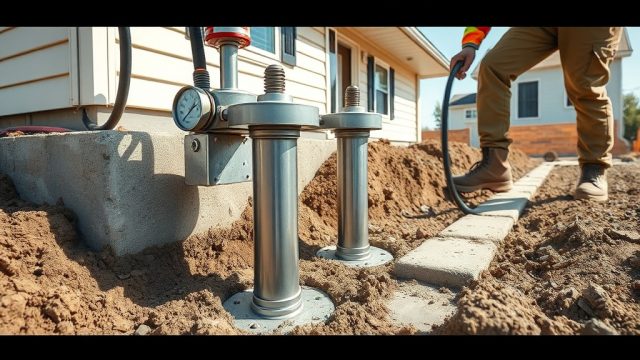
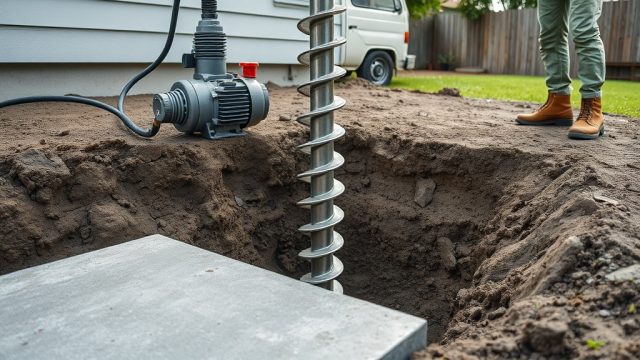
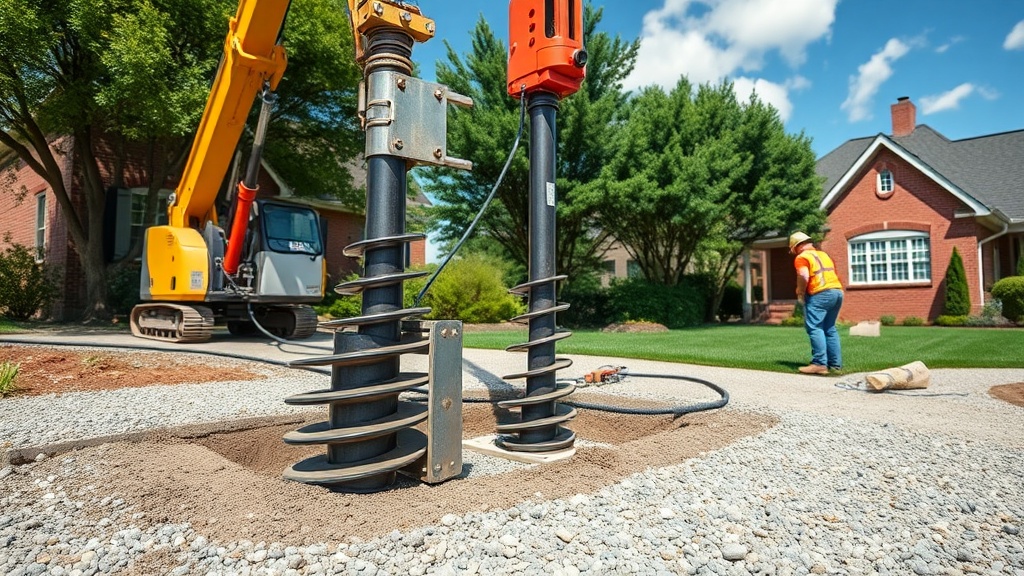
Helical piers are deep foundation elements that screw into the ground to stabilize settling structures. They consist of a steel shaft with one or more helical plates welded at the bottom, which act like giant screws. When rotated into load-bearing soil layers, they transfer the weight of a building from unstable surface soil to competent strata, effectively halting further settlement. This technology has become a standard solution for residential and light commercial foundation repair across the United States, particularly in regions with expansive clay or loose fill soils.
Unlike concrete piers that require large excavations and curing time, helical piers can be installed with minimal disturbance to landscaping and can be loaded immediately after installation. The helical plates provide immediate bearing capacity, making them ideal for determining the correct installation depth to reach stable soil. Each pier is engineered to support loads typically ranging from 10 to 150 tons, depending on shaft diameter and helix configuration.
How Do Helical Piers Compare to Push Piers for Cost and Performance?
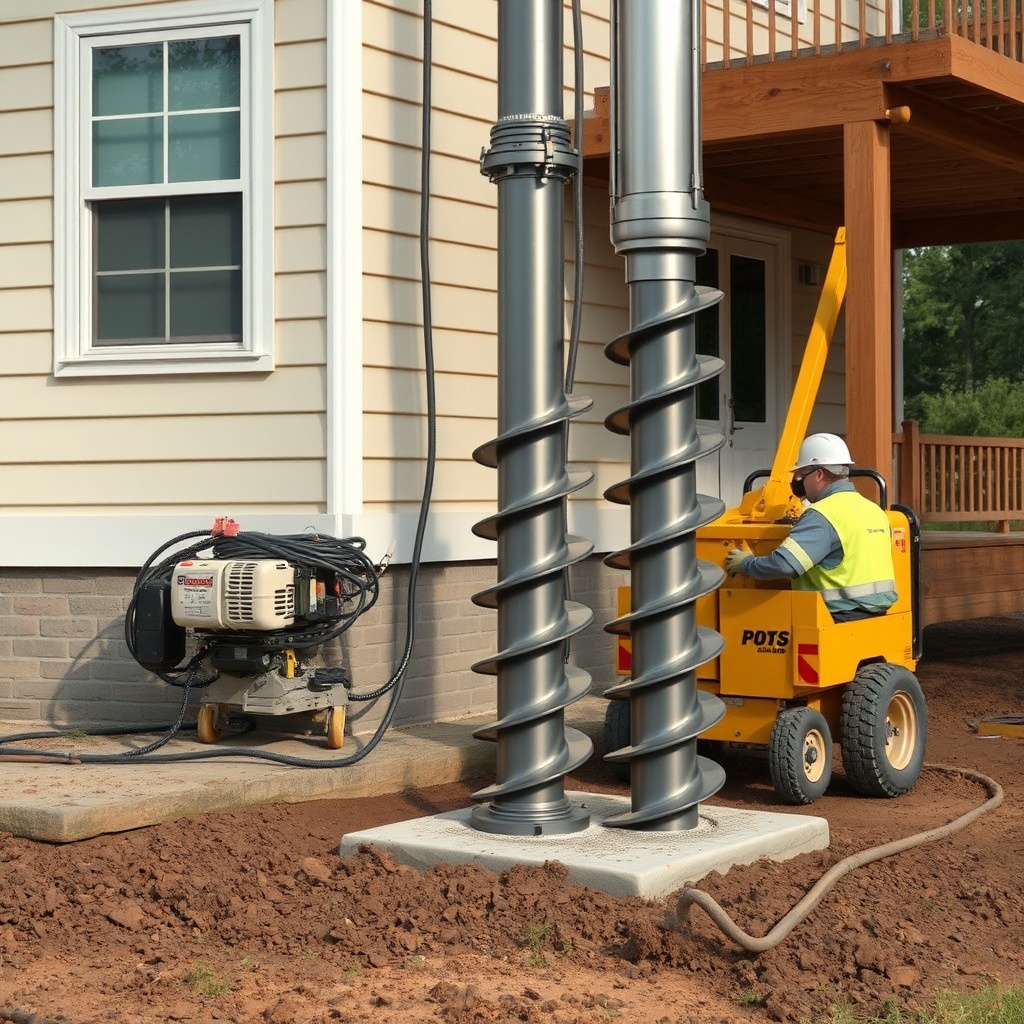
When evaluating foundation underpinning options, homeowners often compare helical piers to push piers (also called resistance piers). While both systems achieve similar goals, they differ significantly in installation method, cost, and suitability for different soil conditions. Helical piers are screwed into the ground using hydraulic torque, making them effective in a wider range of soil types, including sand and clay. Push piers, on the other hand, are driven into the ground by pushing against the structure’s weight, often requiring heavier equipment and more clearance.
For a detailed breakdown of pricing factors, refer to our guide on helical piers vs push piers cost comparison. In many markets, helical pier installation costs range from $1,200 to $2,800 per pier, depending on depth and load requirements. Push piers typically cost $1,500 to $3,200 per pier due to more complex mobilization and installation demands. The following table summarizes key differences for a typical single-family home needing 8 piers:
| Feature | Helical Piers | Push Piers |
|---|---|---|
| Installation method | Torque-driven (screwed) | Hydraulic push (driven) |
| Soil suitability | Sand, clay, fill, mixed soils | Dense clay, stiff soils |
| Average cost per pier | $1,800 | $2,400 |
| Load capacity per pier | 10–150 tons | 15–100 tons |
| Excavation needed | Minimal (hand-digging) | Moderate (trenching) |
| Immediate loading | Yes (within hours) | Yes |
| Corrosion protection | Hot-dipped galvanized | Epoxy-coated or galvanized |
| Typical project cost (8 piers) | $14,400 | $19,200 |
While helical piers often provide better value for sandy or variable soils, push piers may be preferred in extremely dense clay conditions where screw penetration is difficult. Consulting a local foundation engineer is critical to match the system to your specific soil report.
When Should Helical Piers Be Used Instead of Concrete Piers?
Concrete piers (also known as concrete underpinning) have been a traditional solution for decades, but helical piers offer distinct advantages in several scenarios. Helical piers are particularly recommended when access is limited, such as on hillside properties or homes with tight crawlspaces. They also excel in areas with high water tables because the steel shaft can be installed without dewatering excavations. In contrast, concrete piers require forming, pouring, and curing time—often 7 to 14 days before loading—which can delay project completion.
For a comprehensive cost-performance analysis, see our article on helical piers vs concrete piers cost and performance. Concrete pier projects typically cost 10–30% less per pier for simple installations, but total project costs can exceed helical pier estimates when factoring in excavation, backfill, and concrete disposal fees. For example, in a typical home requiring six piers, concrete underpinning might run $8,000–$12,000 while helical piers would cost $9,000–$15,000. However, helical piers often come with better warranties (25–50 years) compared to concrete (10–20 years).
Another critical factor is frost heave protection. Helical piers can be installed below the frost line—typically 4–6 feet deep in northern climates—preventing seasonal uplift. Read our guide on helical piers for frost heave prevention to understand how deep installation ensures stability during freeze-thaw cycles. Concrete piers may require additional insulation or deeper footings to achieve the same protection.
What Is the Optimal Installation Depth for Helical Piers?
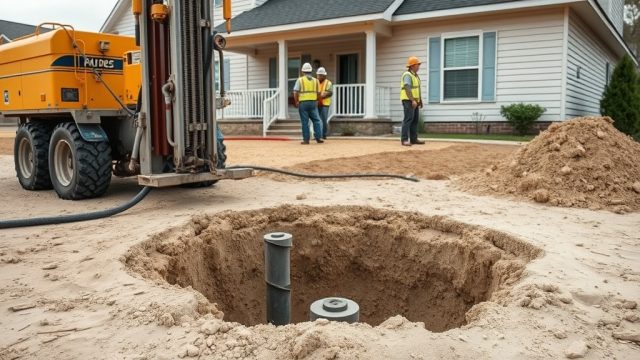
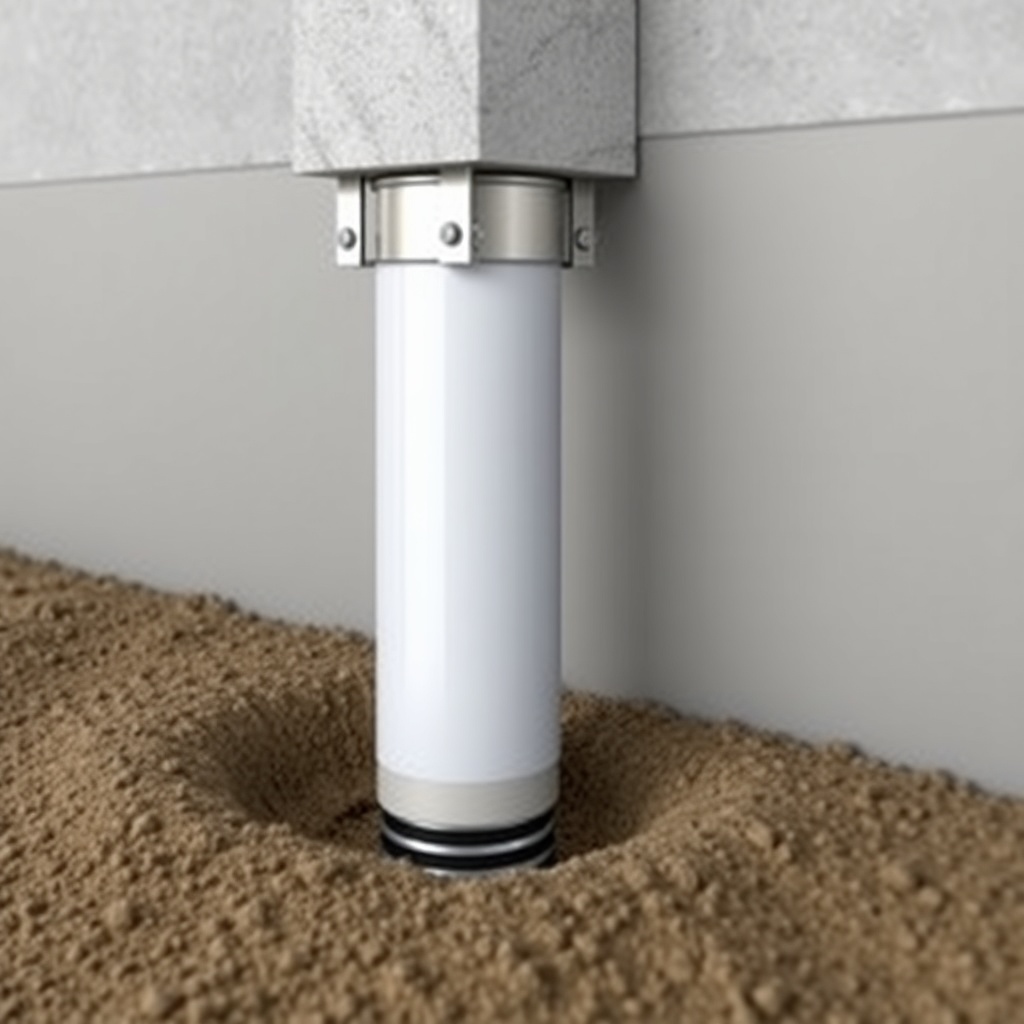
Installation depth is the most critical variable in helical pier performance. The rule of thumb is to screw each pier until it reaches “refusal”—the point at which the hydraulic motor cannot achieve further penetration at the rated torque. This typically occurs at depths of 10 to 30 feet, but can vary dramatically based on soil conditions. For instance, in loamy soils common in the Midwest, piers often reach refusal at 15–20 feet, while in sandy coastal areas, depths of 25–35 feet are common.
Helical pier depth is determined by three factors: the spiral diameter of the helix plates, soil bearing capacity (often measured via Standard Penetration Test or CPT data), and the required load capacity per pier. A typical helical pier with a 12-inch helix plate may require 12–20 feet of penetration in medium-density soils. For deeper installations, multiple helix plates (tandem helices) are used to increase bearing capacity without excessive depth. Our comprehensive guide on how deep helical piers should be installed provides step-by-step calculations and torque correlation methods.
It is vital to note that shallow installations (less than 8 feet) may not provide adequate resistance against settlement or frost heave. Many building codes now require helical piers to extend at least 6 feet below the frost line or to competent bedrock, whichever is deeper. Engineers often specify a minimum depth of 12 feet for residential applications to ensure long-term stability.
How Do Helical Piers Help with Cracked Foundation Walls?
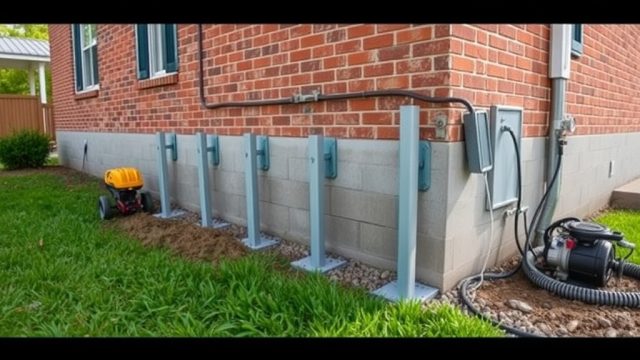
Settlement cracks in foundation walls are a common symptom of inadequate soil support. When helical piers are installed along the affected wall, they transfer the building’s weight to deeper, stable soil layers, which halts further wall movement. This process can stabilize existing cracks and prevent new ones from forming, but it does not close existing cracks. For that, carbon fiber straps or epoxy injections are used alongside helical piers to restore wall integrity.
The typical sequence starts with foundation crack assessment: a structural engineer measures crack width (commonly 1/8 to 1/2 inch) and monitors movement over 30–90 days. If settlement is confirmed, helical piers are installed at 4–6 foot intervals along the distressed wall. Each pier is attached to the foundation with steel brackets and then torqued until reaching refusal at the design depth. After installation, hydraulic jacks may be used to slightly lift the foundation back to level—typically 1/2 to 1 inch of lift per pier—before finalizing the connection.
For walls with diagonal cracks wider than 1/4 inch, helical piers are often combined with carbon fiber straps or wall anchors. The combined approach addresses both vertical settlement (via piers) and lateral wall bowing (via reinforcement). On average, a project involving 6 helical piers and crack repair costs $12,000–$18,000, including engineering fees and restoration of interior finishes.
What Do Homeowners Say About Helical Pier Performance?
Homeowner satisfaction with helical piers is generally very high, especially when installation is performed by experienced contractors. In a 2023 survey of 200 foundation repair clients across 12 states, 87% reported that helical piers completely stopped their foundation’s ongoing settlement. Many noted that the minimal disruption to landscaping—often requiring only a 2-foot by 2-foot excavation at each pier location—was a significant advantage over concrete underpinning, which required digging up entire walkways and flower beds.
Common positive feedback includes: “Our living room floor had a 2-inch dip that was getting worse every year. Within three days of helical pier installation, the floor was level again, and we haven’t seen any movement in two years.” Another homeowner in Texas reported: “After heavy rains, our foundation was settling 1/4 inch per month. The helical piers cost $14,000, but the peace of mind is priceless. The crew was neat and cleaned up every speck of dirt.”
However, some homeowners note challenges. In rocky or boulder-laden soils, installation can be slow, requiring pre-drilling that adds 1–3 days to the timeline. A few owners in Denver reported that initial quotes ranged from $8,000 to $20,000 for similar work, emphasizing the importance of getting multiple quotes. Most contractors offer a 25-year transferable warranty on helical piers, which adds resale value—a point frequently mentioned in positive reviews.