Carbon Fiber Straps and Moisture: Do They Resist Water Damage?
When you reinforce a basement wall with carbon fiber straps, the biggest enemy isn’t shifting soil—it’s moisture. High humidity, groundwater seepage, or condensation can degrade materials over time, so asking if carbon fiber stands up to water is a fair and necessary question for any homeowner. The short answer: yes, carbon fiber straps resist water damage remarkably well, but the real story depends on the adhesive, the installation quality, and how moisture is managed around the foundation. We’ll break down exactly what happens (and doesn’t happen) when these straps meet wet conditions.
Do Carbon Fiber Straps Absorb Water or Degrade in Wet Basements?
Carbon fiber itself is essentially inert when it comes to water absorption. The fibers are made of carbon atoms bonded in a crystalline structure that resists chemical attack, including from water. Laboratory tests show carbon fiber composites absorb less than 0.1 percent of their weight in water after weeks of immersion. That means the strap material won’t swell, rot, or lose tensile strength from moisture alone.
However, the epoxy resin systems used to bond the straps to the concrete wall are more vulnerable. Polyester or vinyl ester resins can break down over time in constant wet conditions, leading to debonding. High-quality two-part epoxies are better, with hydrolysis resistance tested to thousands of hours in water. Look for products with a wet-layup or underwater-cure rating if your basement has active seepage.
- Carbon fiber straps: No water absorption or strength loss.
- Epoxy resin: Depends on formulation; water-resistant epoxies are available.
- Concrete interface: Moisture can weaken the bond if surface preparation isn’t perfect.
For a deeper look at the installation process, see our guide on Carbon Fiber Straps for Foundation Crack Repair: Step-by-Step Installation.
What Happens When Moisture Gets Behind a Carbon Fiber Strap?
One of the more common issues we hear about involves water seeping through a crack and then traveling along the interface between the strap and the wall. This isn’t the same as the strap failing—it’s the adhesive bond failing due to hydraulic pressure or repeated freeze-thaw cycles. Over time, trapped moisture can cause the epoxy to soften or become brittle, especially if the wrong resin was used.
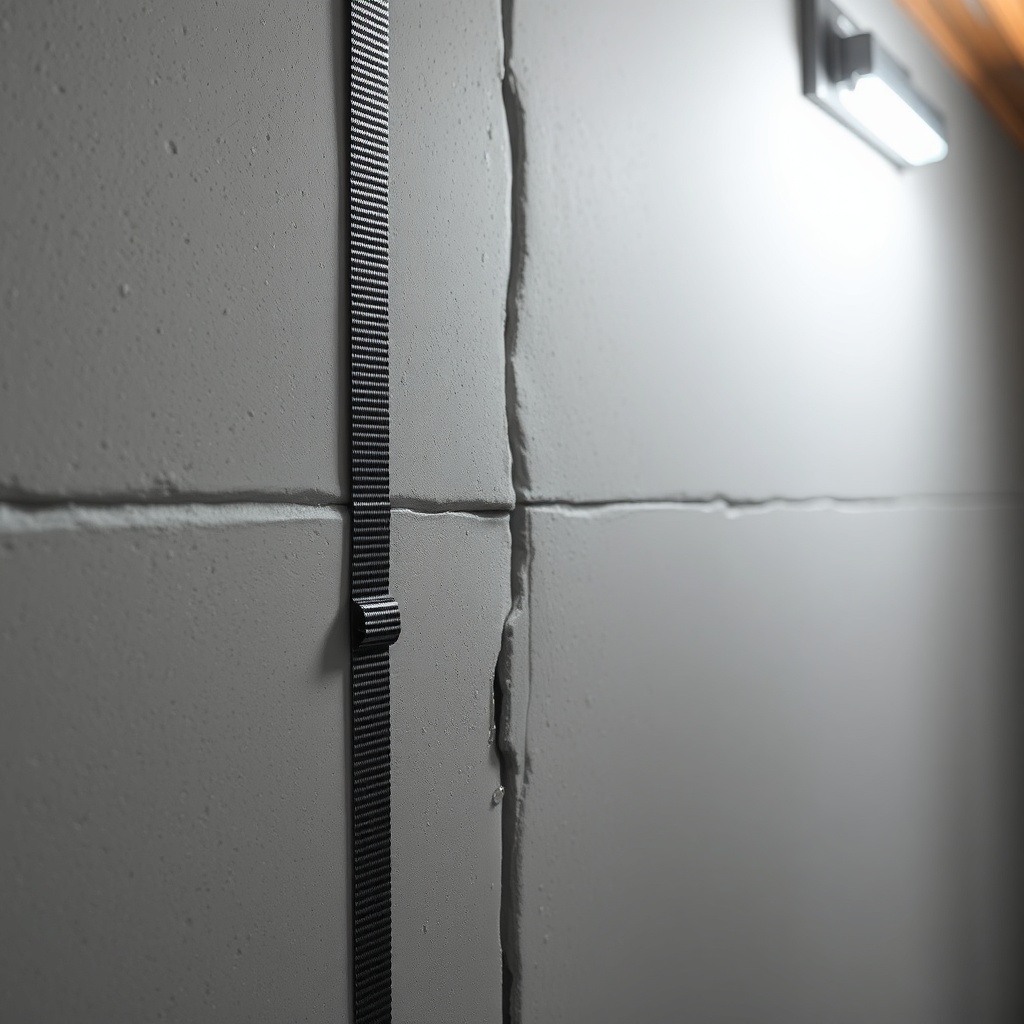
When the bond fails, you’ll see tiny bubbles (blisters) form under the strap, or the strap will start to lift at the edges. In extreme cases, the entire strap can delaminate, leaving the crack unsupported. This is more common in basements with chronic groundwater problems than in damp air alone.
The key fix is to seal the crack from the outside or install an interior drainage system before applying the straps. If you already see blisters, you’ll need to remove the strap, let the wall dry thoroughly, and reset it with a moisture-tolerant epoxy. For signs of trouble, review When to Worry: Carbon Fiber Straps and Crack Widening Signs.
Can Humidity Alone Damage Carbon Fiber Straps Over Time?
High humidity (70-80 percent relative humidity year-round) won’t directly harm the carbon fibers themselves. But it does affect the epoxy and the concrete surface. Constant moisture in the air can slow the curing process if straps are installed in humid conditions, leading to a weaker initial bond. Then, over years, the epoxy may absorb some moisture vapor, which can slightly reduce its glass transition temperature—the point at which the material softens.
For most residential basements, this isn’t a structural concern. The straps will still hold the required load. However, if your basement is a humid crawl space with a dirt floor or a pool dehumidifier, the cumulative effect can be enough to warrant a vapor barrier and a dehumidifier to keep conditions below 60 percent humidity during the cure. Most manufacturers recommend a substrate moisture content of less than 5 percent when applying epoxy.
In short: humidity alone won’t ruin your carbon fiber straps, but it can reduce the bond lifespan from 50+ years to maybe 20-30 years if left unchecked. Keep the basement dry and well-ventilated.
How Does Moisture Affect the Adhesive Bond to Concrete?
This is the most critical point for waterproofing. The concrete surface must be dry and clean before the epoxy is applied. Any moisture at the interface (standing water, dampness, or even high vapor transmission) can prevent the epoxy from achieving full adhesion. Epoxies cure via an exothermic reaction, and water acts as a barrier, causing the adhesive to remain soft or form a weak bond that can peel like tape later.
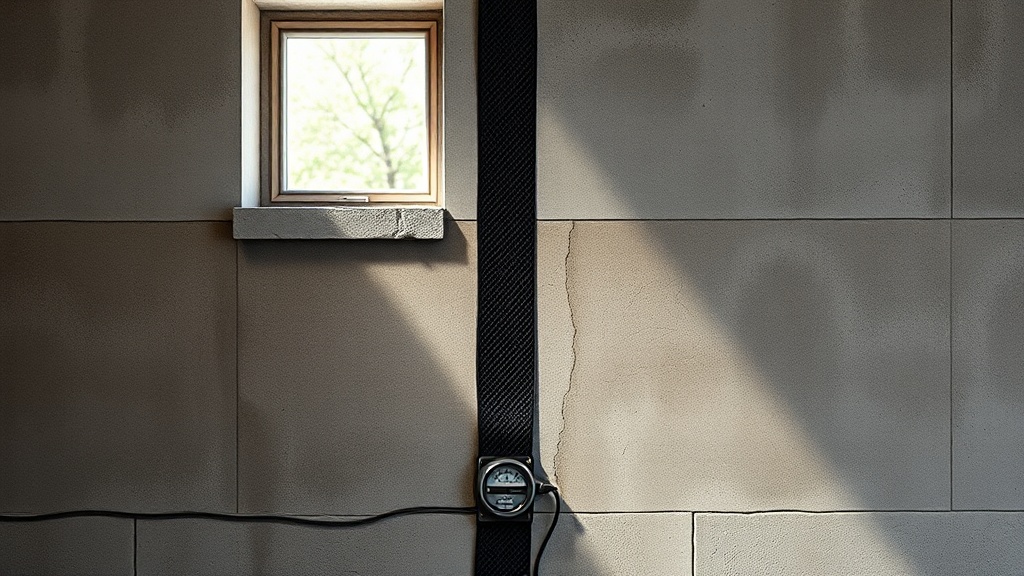
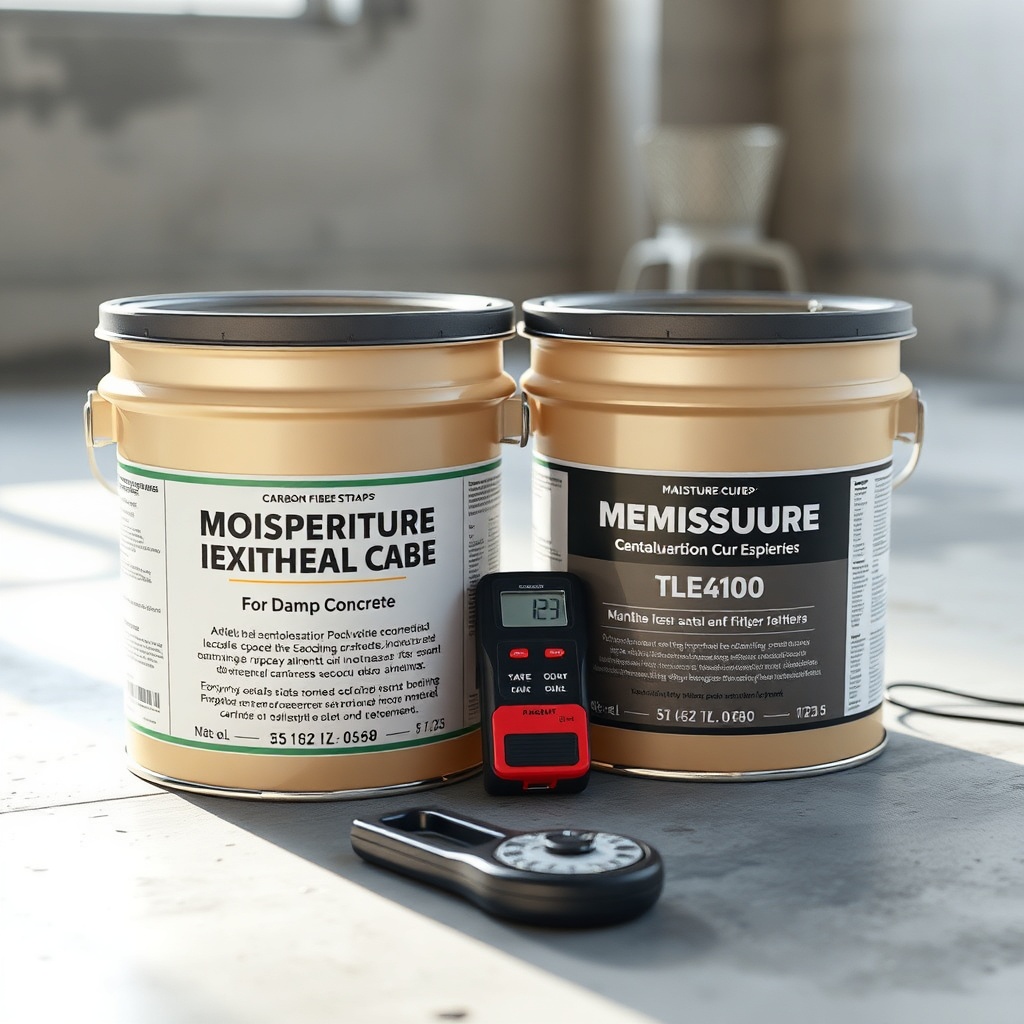
Professional installers use moisture meters to check concrete humidity levels. The maximum acceptable reading is usually 5 percent moisture content by weight (or about 4 pounds per 1,000 sq ft per 24 hours for vapor emission). If your wall is damp, a concrete drying time or even a chemical moisture barrier may be necessary. Some specialty epoxies are formulated for “green” concrete, meaning they can bond to surfaces with residual moisture, but they cost 20-30 percent more.
Comparing different reinforcement methods for wet basements? See our article on Carbon Fiber Straps vs Steel I-Beams: Which is Better for Basement Walls? for a full breakdown.
| Symptom on Strap or Wall | Severity Level | Recommended Action |
|---|---|---|
| Small blisters (under 1/4 inch) at strap edge | Usually not urgent | Monitor every 6 months; improve basement dehumidification |
| Strap lifting more than 1 inch from wall | Needs attention soon | Consult a foundation repair contractor; test bond strength |
| Epoxy turning white or chalking (water damage) | Needs attention soon | Remove strap, dry wall, re-apply with moisture-tolerant epoxy |
| Active water seepage through crack despite strap | Needs attention soon | Install interior perimeter drain or exterior waterproofing |
Do You Need Waterproofing Before Installing Carbon Fiber Straps?
Technically, you can apply carbon fiber straps to a wall with minor dampness if you use the right epoxy and let the surface dry for 24-48 hours. But for long-term reliability, waterproofing should come first. The strap itself isn’t a water barrier—it’s designed to resist lateral earth pressure, not to keep water out. If water continues to flow through the crack after installation, it will eventually compromise the adhesive, and you’ll have a failed repair.
Best practice is to address the source of water first: install a curtain drain outside, apply a waterproof coating, or fix gutters and downspouts. On the interior, a sump pump and French drain system can manage hydrostatic pressure. Once the wall is dry (or at least with minimal moisture), then you can install the straps for structural stability. This two-step approach ensures the strap’s adhesive remains intact for decades.
If budget is tight, some contractors will apply a vapor-permeable membrane over the crack before bonding the strap, then use a water-resistant epoxy. This is a compromise, not a permanent fix. For serious water issues, separate the waterproofing project from the structural repair.
What’s the Best Epoxy for Carbon Fiber Straps in Wet Basements?
Not all epoxies are equal when it comes to moisture resistance. The best choice is a 100 percent solids, high-molecular-weight epoxy that meets ASTM C881 (types I, II, and IV are most relevant). Type II is specifically for moist concrete, and Type IV offers high-temperature resistance. Brands like Simpson Set-XP, Sika AnchorFix, and Bentonite-based systems have specific products rated for damp or underwater application.
Key features to look for:
- Low water sensitivity: The epoxy should be able to cure in 100 percent relative humidity without clouding or softening.
- High tensile lap shear strength: Above 1,500 psi for real-world performance.
- Hydrolysis testing: Check if the manufacturer publishes data on strength retention after 1,000 hours in water (good systems retain 90 percent+).
Cost: Moisture-tolerant epoxies add about $50-$100 per 10-ounce cartridge compared to standard epoxies. That’s a small premium for peace of mind in a damp basement.
What Owners Say
“I had carbon fiber straps installed in my wet basement three years ago. The contractor used a moisture-tolerant epoxy, and we also fixed the gutters. The straps are still tight and the crack hasn’t moved. No blisters or peeling. I check every season.” – Michael R., Illinois
“Our straps started lifting after two years because water was still coming through the crack. Turned out the epoxy wasn’t rated for wet concrete. We had to pay another $1,200 to redo the job with better preparation. Should have waterproofed first.” – Linda T., Ohio
“I sealed the crack from the outside with a bentonite patch and then installed the straps myself. No water issues in four years. The key is to dry the wall thoroughly, then apply the epoxy when the humidity is below 50 percent.” – David K., Pennsylvania
Frequently Asked Questions
Can carbon fiber straps rot or mold?
No, carbon fiber itself is inert and won’t rot or support mold. However, if moisture gets trapped behind the strap, mold can grow on the adhesive or on the concrete surface. Proper surface preparation and low humidity prevent this.
Do carbon fiber straps stop water from leaking?
No, they are structural reinforcements, not waterproofing. They prevent the crack from widening but they don’t seal it. Use a separate waterproofing method (e.g., hydraulic cement, epoxy injection, or an exterior membrane) to stop leaks.
How long do carbon fiber straps last in a damp basement?
With proper installation and a moisture-tolerant epoxy, 30-50 years is realistic. Without water management, the adhesive bond may degrade after 10-20 years. The straps themselves can last indefinitely.
What’s the cost of redoing carbon fiber straps after water damage?
Expect $600 to $1,500 for removal, drying, and reinstallation of straps, not including the cost of addressing the water source. This is often less than replacing steel beams in the same scenario.
Can I install carbon fiber straps over damp concrete?
Only if you use a specialized moisture-tolerant epoxy and the concrete surface is free of standing water. Most standard epoxies require a surface moisture content below 5 percent. Consult the manufacturer’s instructions.
How do I know if my epoxy is failing due to moisture?
Watch for white chalky residue, blisters (raised bubbles) under the strap, a soft or tacky feel, or the strap peeling at the edges. A simple tap test (if it sounds hollow) can also indicate delamination.