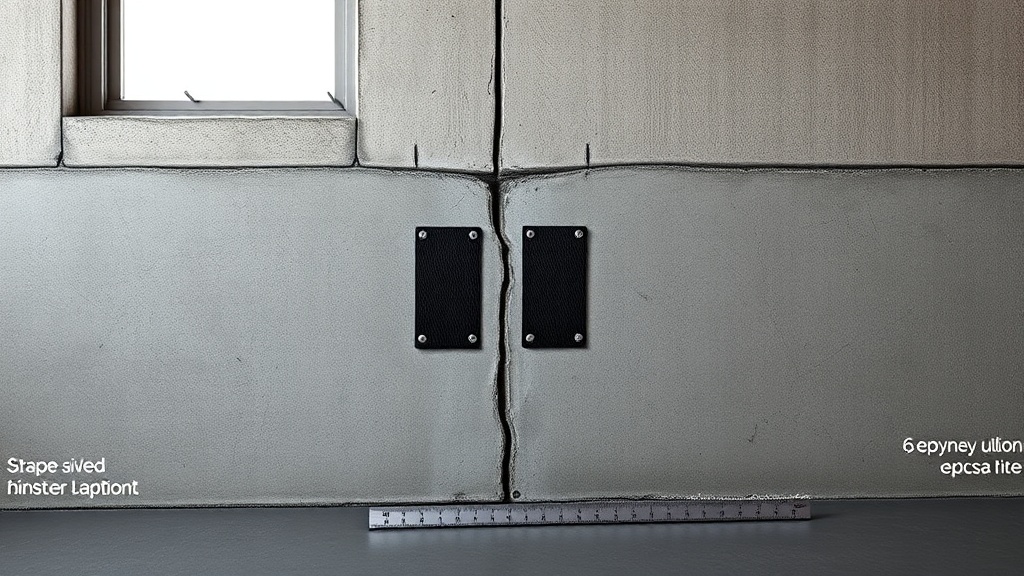
When to Worry: Carbon Fiber Straps and Crack Widening Signs
Homeowners who install carbon fiber straps often feel relief after reinforcing a bowed or cracked basement wall. But cracks can still shift over time, raising legitimate concern. Knowing exactly when a widening crack signals a real problem—rather than normal settlement or harmless seasonal movement—can save you from costly panic or dangerous neglect. This article explains the specific visual and measurable signs that demand attention and how carbon fiber straps react when underlying movement continues.
How Do I Know If My Crack Is Actually Widening Under Carbon Fiber Straps?
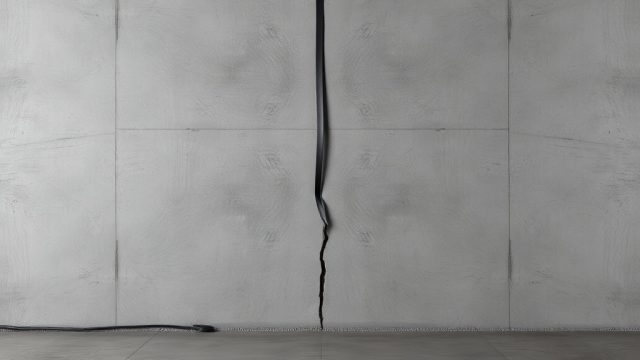
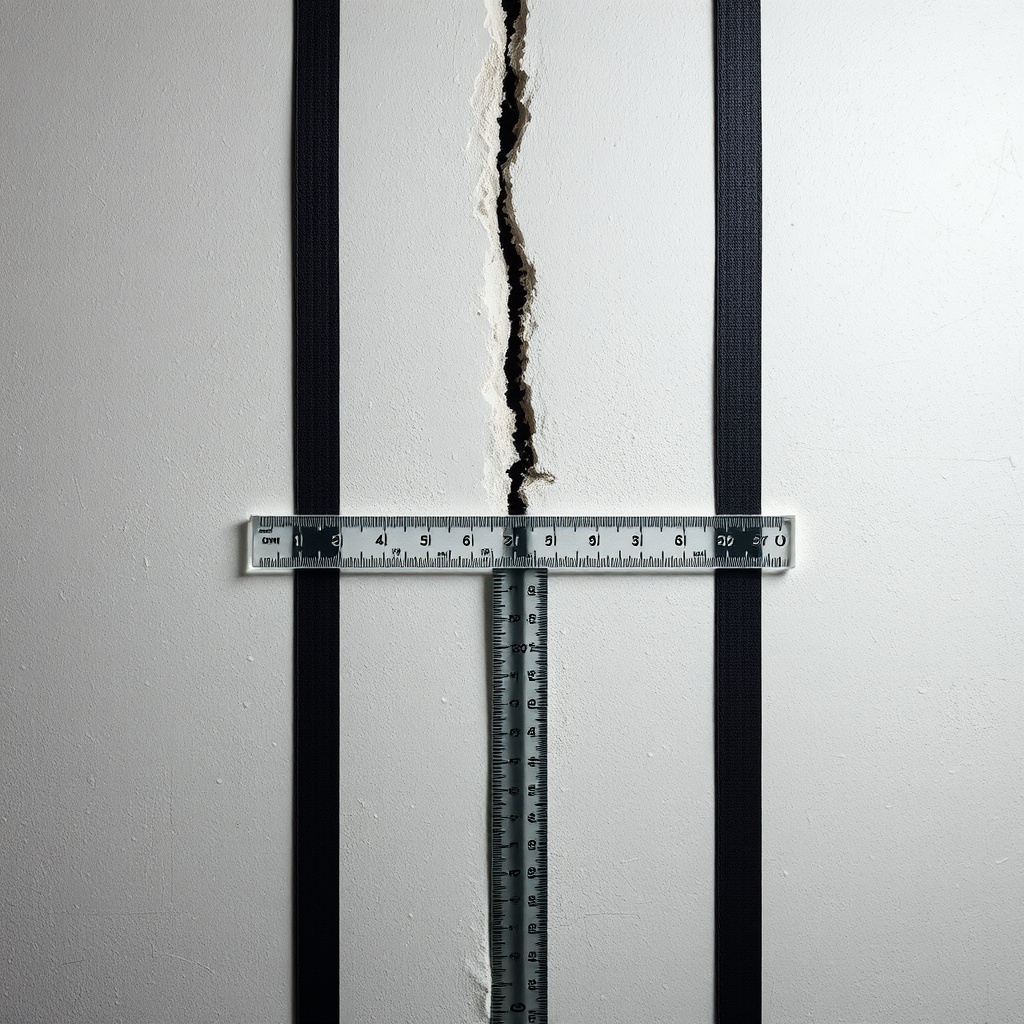
Carbon fiber straps are designed to transfer tension from the wall to the strap, so a small amount of crack opening after installation is not automatically alarming. The key difference lies in rate and magnitude of movement. Use a crack-monitoring gauge or a simple tape measure at three points along the crack: top, middle, and bottom. Record the gap width in millimeters every two weeks for the first three months after installation.
A crack that opens less than 1/16 inch (1.5 mm) over a year, and then stabilizes, is typical of seasonal soil expansion and contraction. A crack that opens 1/8 inch (3 mm) in a single month, especially if accompanied by new stair-step cracks in nearby masonry, indicates active foundation movement that may exceed the capacity of the carbon fiber system. If you see hairline cracks appearing in mortar joints near the strap’s anchor bolts, this suggests the strap is working too hard—or the wall is passing its elastic limit.
Practical tip: Mark the crack width on the wall with a fine-tip permanent marker and date it. If the mark is no longer aligned with the crack edge after four months, call a structural engineer—not just a foundation contractor—to evaluate whether additional reinforcement like helical piers or additional straps is needed.
Can Carbon Fiber Straps Fail If the Crack Widens Too Quickly?
Carbon fiber straps have an ultimate tensile strength of around 350,000 to 400,000 psi per square inch of cross-section. A standard 4-inch-wide strap can handle roughly 10,000 to 14,000 pounds of tension before reaching its breaking point. However, the weak link is often not the strap itself—it is the epoxy bond to the wall and the anchor bolts holding the strap at top and bottom.
When a crack widens faster than the strap can “load up,” the epoxy can peel away from the wall in a process called delamination. You will notice a hollow sound when tapping the strap near the crack, or you may see a thin gap between the strap surface and the concrete. This indicates the bond is failing, and the strap is essentially hanging on skin tension without proper adhesion.
To test bond integrity, perform a simple “push test” with the palm of your hand—if the strap flexes more than 1/8 inch away from the wall when pressed firmly near the crack center, the epoxy bond is compromised. Delamination requires immediate professional attention because the strap will not resist further crack widening once detached from the substrate. In extreme cases, you may need to remove the strap, clean the wall, and re-install with fresh epoxy and mechanical anchors.
What Do Stair-Step Cracks Along the Floor Joist or Top Plate Mean?
Horizontal cracks in a poured concrete wall are one thing. But stair-step cracks that follow mortar joints in block walls—and extend upward toward the floor joist or top plate—indicate that the entire wall is tilting under lateral soil pressure. Carbon fiber straps placed on a block wall reinforce the overall panel, but they cannot stop rotational movement at the top of the wall if the footings are sinking or the soil is pushing too hard.
If you observe fresh stair-step cracks that align with the strap’s top anchor bolt, the strap might be pulling away from the wall along the mortar line. A gap larger than 1/4 inch between the top plate and the wall means the foundation wall has tilted beyond a safe limit (typically 1 inch of bow per 10 feet of wall height). In this scenario, carbon fiber straps alone are no longer a sufficient repair—you need underpinning or helical piers to stabilize the footings, and possibly steel I-beams to provide stronger lateral resistance. Refer to our comparison guide Carbon Fiber Straps vs Steel I-Beams: Which is Better for Basement Walls? to see when straps are no longer the best option.
| Sign You Notice | Usually Not Urgent (Monitor) | Needs Attention Soon (Act Within 1-4 Weeks) |
|---|---|---|
| Crack gap changes | Less than 1/16 inch per year; stabilizes after one season | 1/8 inch or more in a single month; continues widening each measurement |
| Strap bond condition | Firm tap sounds solid; no separation visible | Hollow sound; visible gap between strap and wall; strap flexes >1/8 inch from wall |
| Crack pattern | Single vertical crack; no new branches | New stair-step cracks in block wall; diagonal cracks near top plate |
| Wall tilt | Less than 1/2 inch out of plumb over 10 ft height | 1 inch or more out of plumb; basement floor sinking or heaving |
| Water intrusion | Occasional dampness after heavy rain only | Constant weeping or flowing water at crack; white mineral deposits |
Should I Worry About Water Seeping Through the Crack Even With Straps?
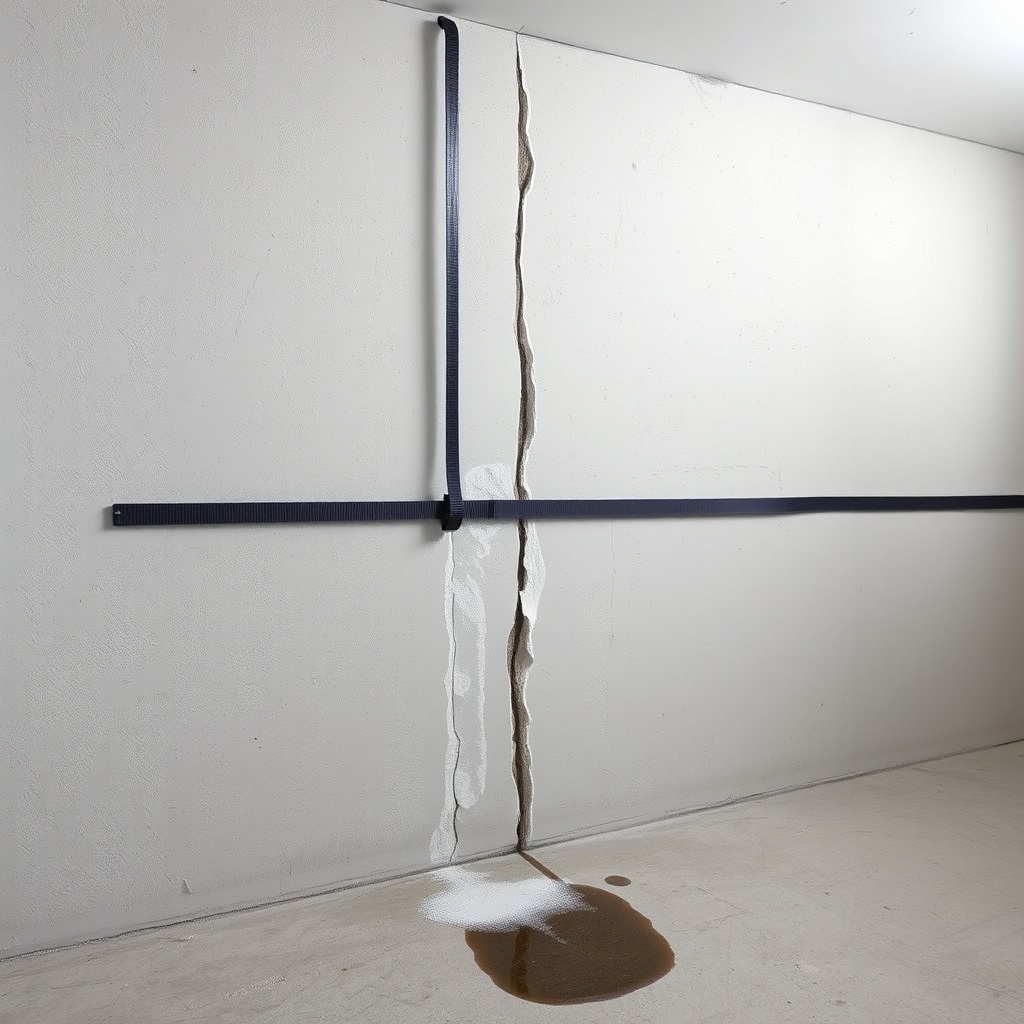
Carbon fiber straps are not waterproofing devices. They are structural reinforcement. If you notice water seeping through a crack that was previously dry after strap installation, that is a sign that the crack has widened enough to break the original epoxy seal or the hydraulic cement patch you applied before installing straps. Water carries fine soil particles that can widen the crack further over time through erosion.
Moisture also compromises the epoxy bond if it comes into contact with the adhesive layer before full curing (usually 72 hours). If you see efflorescence—white powdery deposits—on the wall near the strap, the water is leaching calcium hydroxide from the concrete. That mineral buildup can actually push the strap away from the wall microscopically, reducing bond area.
In the short term, you can inject a low-viscosity polyurethane crack injection from the interior to seal the leaking crack, as long as the strap is installed at least 6 inches away from the injection point on each side. However, if the water is flowing at a rate more than a slow drip (say, a steady trickle that fills a bucket within an hour), the crack is likely large enough that the strap’s tension capacity is being exceeded. At that point, you need structural assessment before any waterproofing. For more detail on how moisture interacts with strap materials, see Carbon Fiber Straps and Moisture: Do They Resist Water Damage?.
What About Cracks That Get Smaller or Disappear—Is That Normal?
Yes, paradoxical as it sounds, a crack that appears to close or become narrower can also indicate trouble. When a wall continues to bow inward, the crack faces can compress against each other at the inner surface while the outer side of the wall opens wider. This “hinging” action causes the interior plaster or paint to crack and the visible gap to shrink—but only because the wall is folding like a book closing. Meanwhile, the strap may appear loose because the wall is no longer applying outward tension.
Check the strap tension by pressing a long level against the wall on both sides of the strap. If the wall surface is concave (hollow in the middle) while the strap feels slack, the wall has likely exceeded the plastic deformation limit and will continue to collapse inward. This is a red flag that requires immediate engineering evaluation—your carbon fiber straps are no longer effective and you need a foundation repair system capable of active resistance, such as wall anchors pushed through the soil to external deadmen.
When Is It Time to Add More Straps or Upgrade to Steel Beams?
If a single strap is resisting a crack that continues widening, you may be able to add a second strap on the opposite side of the crack or place a horizontal strap across multiple vertical straps to create a grid pattern. The general rule of thumb: one strap per 4 feet of wall length for walls with a bow less than 1.5 inches. For walls with a bow greater than 2 inches or cracks that continue widening after two straps, steel I-beams attached to the floor joist and basement floor provide much higher stiffness (steel’s modulus of elasticity is about 29 million psi versus 33 million psi for carbon fiber—but steel beams provide full cross-section rigidity while straps only resist tension at the surface).
Consider the cost: a complete carbon fiber strap installation per linear foot runs roughly $150 to $300 depending on your region, while a steel I-beam installation averages $500 to $900 per beam plus labor. For cracks that continue widening despite proper strap installation, the incremental cost of upgrading to steel is often worth the long-term structural confidence. For a detailed comparison, read Carbon Fiber Straps vs Steel I-Beams: Which is Better for Basement Walls? which breaks down load ratings and installation complexities.
One important caveat: never install a strap directly over another strap unless the manufacturer specifies a stacking method. Straps rely on epoxy contact with the wall and do not transfer load between layers effectively. Similarly, if you notice the crack widening at the base of the wall near the floor, add a strap that extends at least 3 feet below the crack line. In a basement with moisture issues, check our guide Carbon Fiber Straps and Moisture: Do They Resist Water Damage? for precautions about using straps in wet environments.
What Owners Say
“I installed two 4-inch carbon fiber straps over a vertical crack in my 1950s block wall. After one wet winter, the crack had opened from 1/16 inch to 3/16 inch. I freaked out and called a structural engineer. He said the straps were still working—the wall had stopped bowing further, but the existing crack was widening because the blocks were shifting behind the strap. He recommended injecting the crack with polyurethane foam and adding a third strap across the center. That was two years ago and it’s stable now.” — Tom R., St. Louis, MO
“I had a horizontal crack that was 3 feet long and weeping water. A contractor glued on a single carbon fiber strap. Two months later I saw stair-step cracks in the floor joist area. Turns out the wall was tilting 2 inches at the top. The strap was just cosmetic—it was pulled so tight it had actually cracked the mortar at the top anchor bolt. I ended up ripping it out and installing three steel I-beams. Should have done that from the start.” — Linda S., Chicago, IL
Frequently Asked Questions
Can I re-tighten a carbon fiber strap if it feels loose?
No. Carbon fiber straps are not designed to be re-tensioned. Once installed and cured, the epoxy provides the bond. A loose feeling typically means the strap is delaminating or the wall has moved behind it. Do not attempt to pry the strap tighter—the fibers are brittle under point load and can snap. Call a professional to assess why it feels loose.
How often should I inspect my carbon fiber straps after installation?
Perform a visual inspection every three months during the first year, then annually. Look for cracks, peeling epoxy, rust spots on anchor bolts (use stainless steel bolts), or water stains. Use a tape measure to record the crack width at three points and keep a log.
Will carbon fiber straps stop water from coming through a crack?
No. They are purely for structural reinforcement against lateral soil pressure. You must separately seal the crack with hydraulic cement, epoxy injection, or polyurethane foam to stop water. Straps can actually trap moisture behind them, so address water entry before or immediately after installation.
Do carbon fiber straps expand or contract with temperature changes?
Carbon fiber has a very low coefficient of thermal expansion (roughly 1/10 that of steel), so thermal movement is negligible in basement environments. However, the concrete wall may move seasonally. The strap’s flexibility allows it to accommodate typical wall movement without adding stress.
Is it safe to paint over carbon fiber straps?
Yes, most manufacturers allow painting with latex or water-based paint after the epoxy has fully cured (typically 7 days). Avoid oil-based paints that can soften the epoxy over time. Painting helps hide the strap and protects it from UV light if exposed to sunlight, but check your warranty first.
What is the average lifespan of carbon fiber straps in a basement?
Properly installed carbon fiber straps can last 50+ years. Carbon fiber itself does not corrode, rot, or creep under load. The weak point is the epoxy bond, which degrades under continuous moisture or UV light. In a dry interior basement with no standing water, 30 to 50 years is realistic. Replace the strap if the epoxy shows signs of yellowing, cracking, or peeling.