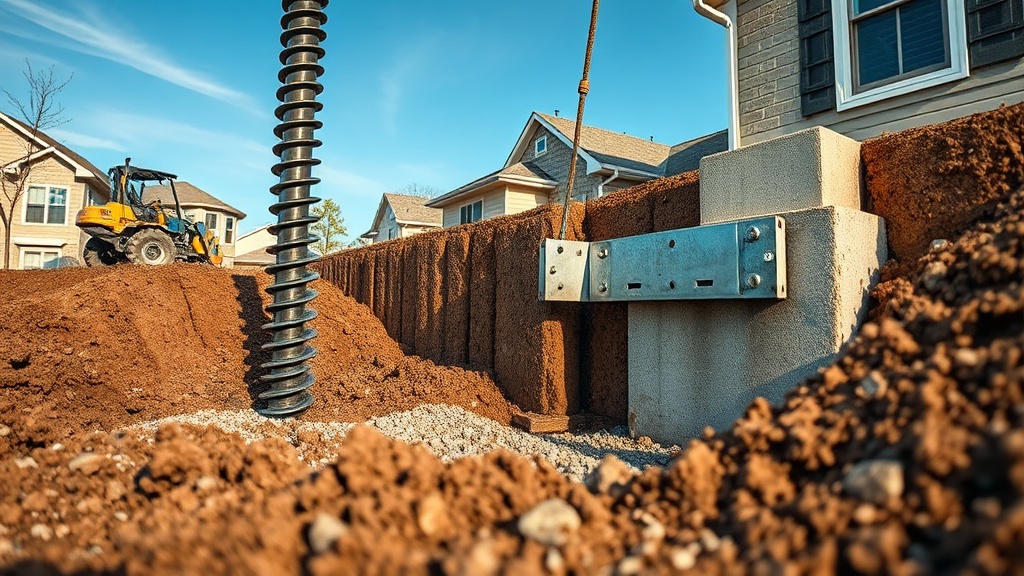
How Deep Should Helical Piers Be Installed? Expert Recommendations
When a home’s foundation starts settling, helical piers often provide the most reliable solution. But the effectiveness of these steel screw piles depends almost entirely on how deep they’re driven into the ground. Installing them too shallow can leave the foundation vulnerable to further movement, while driving them deeper than necessary wastes time and money. This article covers the practical depth recommendations for helical piers, based on soil type, load requirements, and local building codes—so you can make an informed decision with your contractor.
What Determines the Minimum Depth for Helical Piers?
The minimum depth for a helical pier isn’t a fixed number—it’s dictated by the soil’s bearing capacity and the dead load of the structure above. In most residential applications, the pier must reach a stratum of stable soil that can handle the weight without excessive settlement. For sandy or silty soils, this often means drilling below the active zone of seasonal moisture changes, which is typically 8 to 12 feet in temperate climates. In clay-heavy soils with high shrink-swell potential, the minimum depth can rise to 15 feet or more.
Contractors also consider the frost line. In colder regions, helical piers must extend below the frost line—commonly 30 to 48 inches deep—to prevent frost heave from lifting the foundation. But that’s just the starting point. The real depth is determined by torque readings during installation. A pier is considered “set” when it reaches a torque value that correlates to the load capacity—usually 5,000 to 8,000 foot-pounds for a residential application—which often occurs 10 to 20 feet down. If you’re dealing with unstable soil near the surface, the depth will increase accordingly.
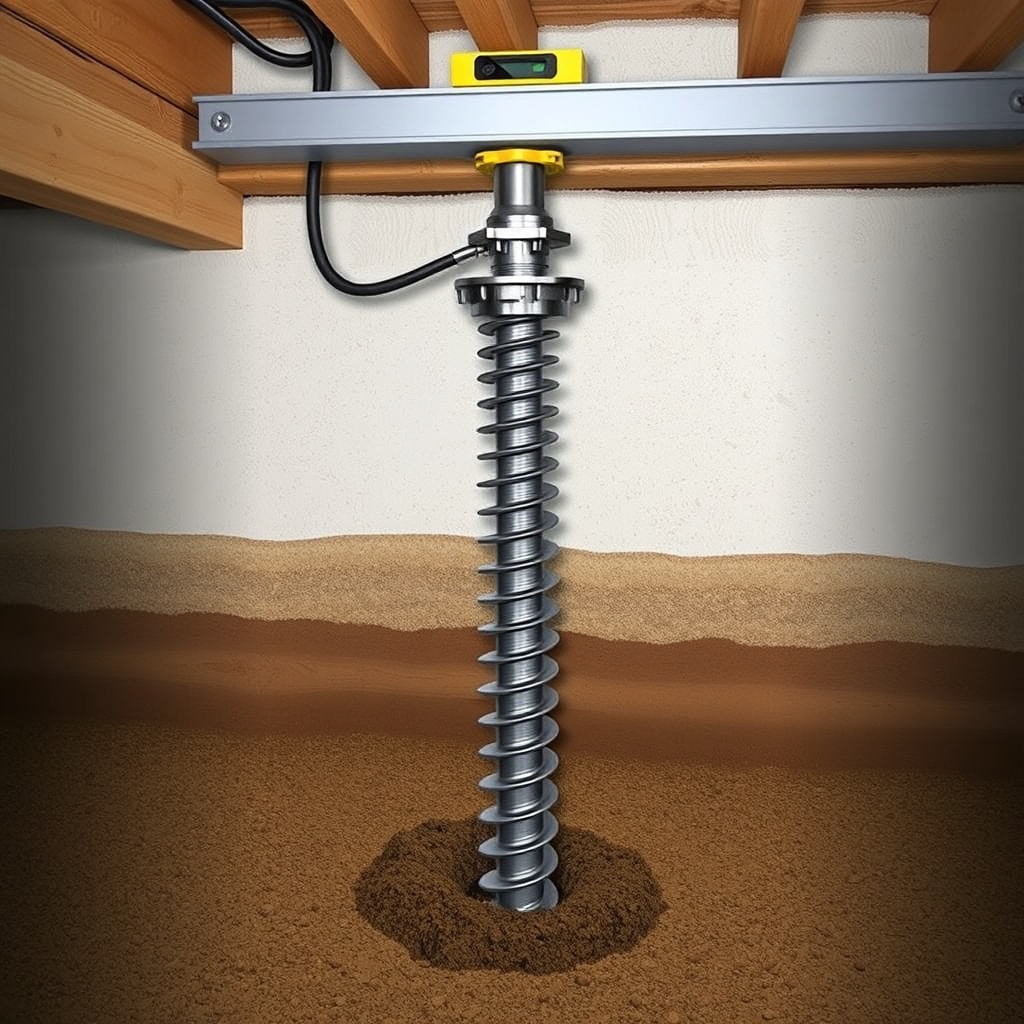
Is There a Standard Depth for Helical Piers in Residential Foundations?
There is no universal standard depth, but most residential helical piers fall within a 12- to 25-foot range. Light structures like single-story homes on slab-on-grade might only need piers 12 to 15 feet deep, while two-story houses with brick veneer can require 18 to 25 feet to reach load-bearing strata. The helical plate diameter also affects the effective depth—larger plates (10 to 14 inches) can distribute load over a wider area, sometimes allowing slightly shallower installation if the soil density is adequate.
Building codes in many parts of the U.S. require a minimum of 12 feet of embedment for piers supporting foundation walls, but this is a general guideline. Local geotechnical reports often override these numbers. For example, in the Gulf Coast region with deep clay layers, typical depths can exceed 30 feet. It’s always best to get a site-specific soil test before installation, rather than relying on a neighbor’s pier depth. A 2017 case study in Indiana showed that piers set at 16 feet performed perfectly for a 1,800-square-foot home, while a similar house 50 feet away needed 22 feet due to a buried sand lens.
| Soil Condition | Typical Pier Depth Range | Urgency Level |
|---|---|---|
| Well-graded gravel or hardpan (bearing capacity > 8,000 psf) | 8–14 feet | Usually not urgent |
| Sandy silts or loose sand (bearing capacity 4,000–6,000 psf) | 14–20 feet | Needs attention |
| Expansive clay or soft marine clay (bearing capacity < 3,000 psf) | 20–35 feet | Needs attention soon |
| Silty clay with high moisture variability | 18–25 feet | Needs attention soon |
How Does Soil Type Affect Helical Pier Installation Depth?
Soil type is the single biggest factor in determining how deep helical piers must go. In cohesive soils like clay, the pier’s helical plates must engage enough undisturbed material to resist both compressive and tensile loads. Soft clays can require depths exceeding 30 feet to generate the necessary friction, while stiff clays may only need 15 to 20 feet. For granular soils like sand, the pier’s depth depends on compaction—loose sand compresses under load, so the pier must go deeper to reach denser layers (often 18 to 25 feet).
Helical Piers vs Push Piers: Cost Comparison for Homeowners explains that helical piers often outperform push piers in loose soils because they can be driven deeper without the risk of buckling. In mixed soil profiles—like a layer of sand over clay—the pier might stop in the clay if it reaches the required torque, even if that depth is only 12 feet. But if a water table is high, piers can sulfidize the steel if not galvanized, so depth must also account for corrosion protection. Always request a soil boring log before signing a contract.
A practical example: a home in Houston with 15 feet of active clay needed helical piers 28 feet deep to reach stable limestone. The installation crew measured torque every 5 feet and confirmed at 26 feet that the required 10,000 foot-pounds was achieved. Without the soil report, they would have guessed 18 feet and likely seen settlement again within two years.
What Are the Expert Recommendations for Helical Pier Depth in Cracked Foundations?
For cracked foundation walls, helical pier depth recommendations shift to prioritize stability first. The pier must reach a depth where it transfers the load to soil that won’t move under seasonal changes. Experts recommend a minimum of 12 feet below the lowest point of the crack, measured from the floor slab or footing, not from grade level. This ensures the pier supports the wall at its weakest point without being influenced by surface heave.
The pier’s helical plates should be positioned so that the top plate is at least 6 feet below the bottom of the footing. This spacing prevents the pier from “pulling” the footing down if the soil settles further. For walls with visible stair-step cracks, the depth is often increased by 20% to account for the additional load from the cracked area. A Helical Piers for Cracked Foundation Walls: A Complete Guide provides step-by-step guidance on how deep to set each pier relative to crack patterns—for example, a pier every 6 to 8 feet along a horizontal crack.
Contractors also recommend depths that allow for future adjustments—some helical piers have extensions that can be added later, but it’s better to install deep enough upfront. A typical 6-inch-diameter helical pier with a 12-inch plate can handle 40 to 60 tons of load if set deep enough, but shallow installation can reduce that capacity by half. The International Building Code (IBC) requires a factor of safety of 2.5 for helical piers, so the recommended depth should be calculated based on 2.5 times the design load.
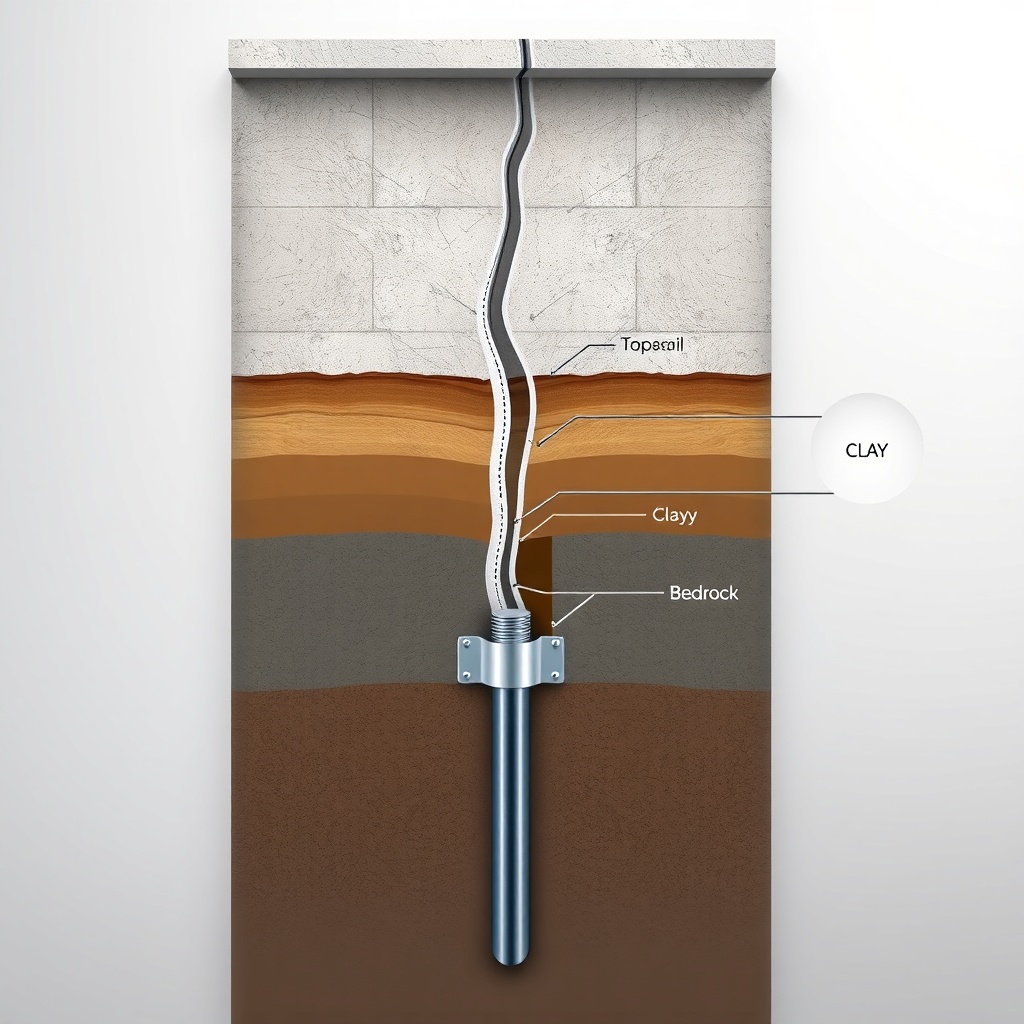
Can Helical Piers Be Installed Too Deep? What Are the Risks?
Yes, helical piers can be installed too deep—though it’s less common than shallow installation. The main risk is over-screwing, where the pier continues rotating after reaching refusal, which can spin the helices out of the soil column and reduce load capacity. This typically happens in very dense soil or rock when the installer continues driving beyond the manufacturer’s recommended torque limit. A typical 10,000 foot-pound torque reading matched to a 12-inch helical plate can support about 60 tons, but exceeding that torque by 20% (12,000 foot-pounds) can cause the plate to slip.
Another risk is cost. A helical pier that goes from 25 feet to 35 feet adds roughly $25 to $40 per foot in most markets—so an extra 10 feet per pier on a 10-pier job could add $2,500 to $4,000. In some cases, deep piers may also encounter underground utilities or bedrock, which can require specialized equipment or alternative underpinning methods. That’s why soil surveys are essential—they tell you the deepest stable layer so you don’t blindly go past it.
Water damage is another hidden concern with excessive depth. Protecting Helical Piers from Water Damage: Best Practices notes that deeper piers are more exposed to groundwater, which can cause corrosion if the steel isn’t properly galvanized. For depths exceeding 30 feet, consider hot-dip galvanized or epoxy-coated piers. And while deeper piers generally mean more stability, never let a contractor push for extra depth without a geotechnical reason—it’s often a sales tactic to inflate the bill.
How Do Local Building Codes Influence Helical Pier Depth?
Local building codes in the U.S. and Canada set minimum depth requirements for helical piers, usually based on the International Residential Code (IRC) or the IBC. The IRC Section 1809.7 requires piers to extend at least 12 inches into stable soil below the frost line, and many jurisdictions adopt a 12-foot absolute minimum for any underpinning pier. But these are baseline numbers—actual depth must be determined by a structural engineer or geotechnical engineer based on site conditions.
Some areas, like Florida’s Miami-Dade County, have stricter rules due to high water tables and hurricane loads, requiring a minimum of 18 feet for helical piers supporting grade beams. In seismic zones (e.g., coastal California), the code demands that piers reach depths where the soil won’t liquefy—often 25 to 35 feet. The cost implication is significant: meeting these codes can add $5,000 to $15,000 to a typical project. Always verify with your local building department before finalizing depth specifications.
Helical Piers vs Push Piers: Cost Comparison for Homeowners highlights that in regions with strict seismic codes, helical piers may actually be more cost-effective than push piers because they can be driven deeper into liquefiable soils without needing a heavy rig. For example, in Utah’s Wasatch Front, helical piers are required to reach 30 feet in some areas—but that depth is achievable with standard equipment, whereas push piers would require larger machinery.
What Owners Say
“We had a 20-year-old split-level with cracks in the basement. The contractor recommended helical piers at 18 feet, but our soil test showed we needed 22 feet to hit the hard clay. It added $1,200 to the project, but the house hasn’t moved a millimeter in three years.” — Homeowner in Dallas, TX
“I wish I had asked more questions about depth before they started. The crew installed all 10 piers to exactly the same depth—16 feet—even though one corner was on an old stream bed. That corner settled another inch within six months. I had to pay for two extra piers at 22 feet. Next time, I’ll demand individual torque logs.” — Homeowner in Richmond, VA
Frequently Asked Questions
1. What is the typical depth for helical piers supporting a single-story home?
For a single-story home on slab-on-grade, typical depth ranges from 12 to 18 feet, depending on soil conditions. In stable sand or gravel, 12 feet is common; in clay, you may need 15 to 18 feet.
2. How deep do helical piers need to be below the frost line?
At least 12 inches below the frost line, but many codes require the entire pier to be below the frost depth. In Northern U.S. states, that means 36 to 48 inches below grade, but the load-bearing depth is often much deeper.
3. Can helical piers go through bedrock or rock layers?
Helical piers are not designed for bedrock—they’re torque-driven and can’t penetrate hard rock. If rock is encountered, the pier must stop above it and transfer load to the rock surface, or the installation method must change to drilled micropiles.
4. Should I get a soil test before helical pier installation?
Absolutely. A soil boring test (costing $500 to $2,000) is the only way to determine the depth and load capacity of the soil. Skipping it can lead to undersized piers and future settlement.
5. How is helical pier depth measured during installation?
Depth is measured from the top of the pier (at the bracket) to the tip of the lead section. Installers record this along with torque readings at every 5-foot interval. A final torque reading confirms the depth is sufficient.
6. What happens if a helical pier is not installed deep enough?
It won’t generate the required load capacity, leaving the foundation vulnerable to further settlement. The pier may also be subject to frost heave or soil creep, which can crack the foundation again. A shallow pier often needs to be abandoned and replaced.