Helical Piers vs Push Piers: Which Foundation Repair Option Saves You More?
When your home’s foundation starts sinking, two of the most common underpinning solutions are helical piers and push piers. While both can stabilize a settling slab or footing, their upfront costs and long-term value differ significantly. This guide breaks down the cost comparison between helical piers and push piers for homeowners, covering installation prices, factors that affect your final bill, and what real owners have experienced.
What Is the Average Cost Difference Between Helical Piers and Push Piers?
The most immediate question for any homeowner is which system is cheaper. On average, helical piers cost between $1,200 and $3,200 per pier installed, while push piers range from $1,500 to $3,800 per pier. The total project cost depends on the number of piers needed, soil conditions, and accessibility.
For a typical residential foundation repair requiring 6 to 10 piers, homeowners can expect:
- Helical piers: $7,200 to $32,000 total
- Push piers: $9,000 to $38,000 total
Helical piers tend to be cheaper for lighter loads and shallower installations, but push piers may be required for heavier structures or deeper bearing strata. Always get at least three quotes from licensed contractors to compare local rates.
| Pier Type | Average Cost per Pier (Installed) | Typical Number of Piers | Total Project Cost Range |
|---|---|---|---|
| Helical Piers | $1,200 – $3,200 | 6–10 | $7,200 – $32,000 |
| Push Piers | $1,500 – $3,800 | 6–10 | $9,000 – $38,000 |
Why Do Helical Piers Usually Cost Less Than Push Piers?
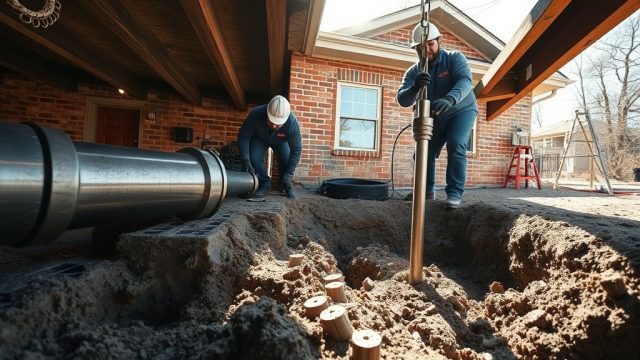
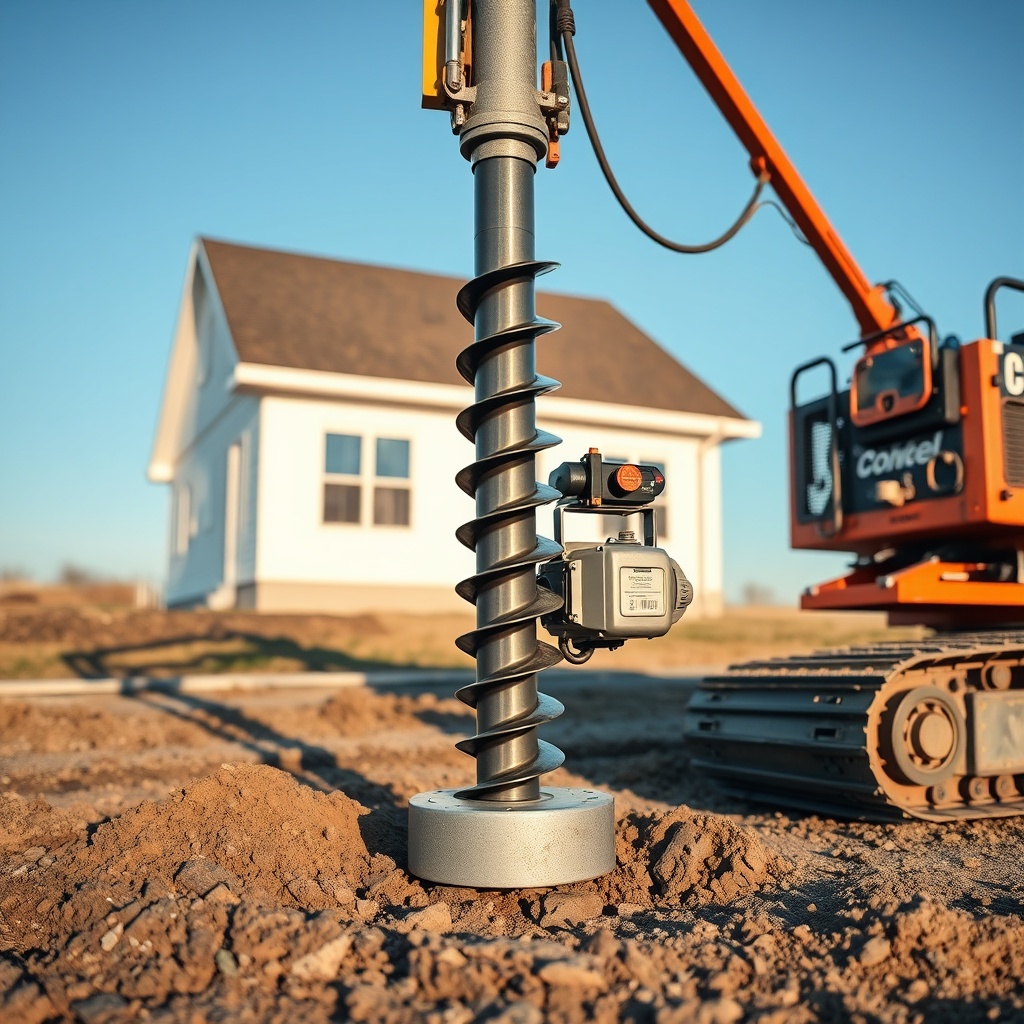
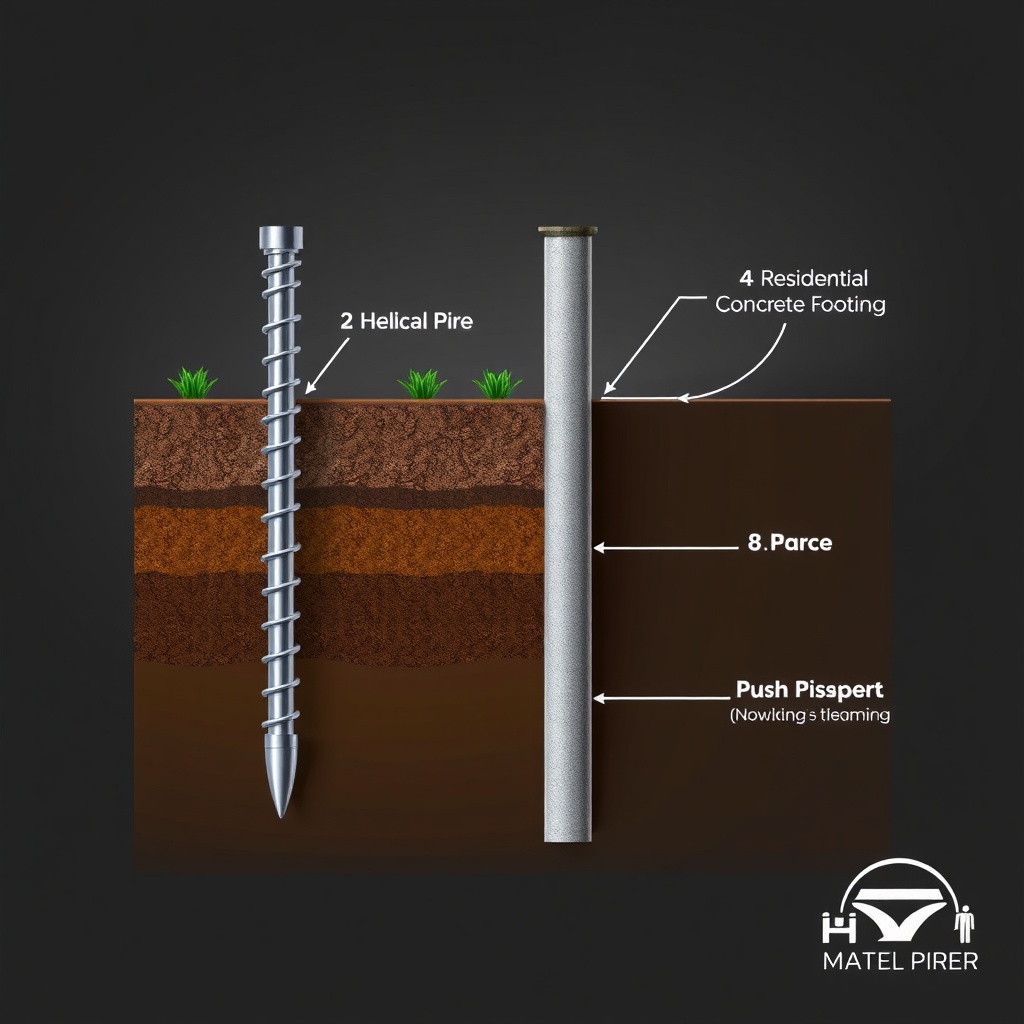
Helical piers are mechanically screwed into the ground using a hydraulic torque motor, which is generally faster and requires less heavy equipment than push piers. Push piers, in contrast, require a large hydraulic ram to push the pier sections into the soil, often needing more mobilization and setup time.
Key cost factors that make helical piers more affordable:
- Smaller installation crew – helical piers can often be installed by a 2-person crew versus 3–4 for push piers
- Less site disturbance – helical piers can be installed in tight spaces, reducing the need for excavation or driveway removal
- No concrete curing time – helical piers can be loaded immediately after installation, eliminating delays
- Lower material costs – helical pier shafts are typically lighter and use less steel than push pier sections
However, these savings depend on soil conditions. In dense clay or rock, helical piers may require more force to install, pushing costs up. For deep installations over 50 feet, push piers may become more economical due to their ability to handle higher loads with fewer sections.
When Does Push Pier Cost Become Worth the Extra Investment?
Push piers (also called resistance piers) are not always the more expensive option. For heavy structures like multi-story homes or commercial buildings, push piers can support higher loads per square inch of bearing area. They are also better suited for:
- Deep bearing strata – when stable soil is 50 feet or more below grade, push piers can be extended with additional sections without losing capacity
- Expansive clay soils – push piers can be driven deeper to reach stable soil below the active clay zone
- Existing slab-on-grade foundations – push piers can be installed through the slab with minimal cutting
For typical single-family homes on sandy or silty soil, helical piers usually provide adequate capacity at a lower cost. But if a structural engineer specifies a higher load capacity (50,000 lbs or more per pier), push piers may be the only viable option.
Learn about installation depth requirements in our guide: How Deep Should Helical Piers Be Installed? Expert Recommendations.
What Hidden Costs Affect the Final Price of Helical Pier Installation?
The quoted cost per pier often excludes several factors that can double or triple your final bill. Common hidden costs for helical pier installation include:
- Soil testing – $500 to $2,000 for geotechnical analysis to determine required pier depth and capacity
- Engineering design – $500 to $1,500 for stamped plans required by your local building department
- Permit fees – $100 to $500 depending on your municipality
- Access issues – $300 to $1,000 for removing decks, landscaping, or fences to reach the foundation
- Load testing – $400 to $800 per pier for verification that each pier meets specified capacity
- Mobilization – $200 to $600 for bringing equipment to the site, especially in rural areas
Always ask for a written contract that itemizes all these potential costs. A contractor who offers a flat “turnkey” price may be more expensive upfront but can save you from surprises later.
How Does Homeowner Experience Compare Between Helical and Push Piers?
Real feedback from homeowners across the country reveals consistent patterns about each system.
On Helical Piers: “We had eight helical piers installed last fall for our 1950s ranch house. The crew was done in two days and didn’t need to remove our concrete patio. Total cost was $18,000, which was $4,000 less than the push pier quote. No cracks returned in the drywall after two years.” — Sarah M., Austin, TX
On Push Piers: “Our engineer specified push piers because the soil was unstable at 40 feet. The installation took three days and cost $24,000 for 10 piers, but the house hasn’t moved a millimeter since. Worth every penny for peace of mind.” — Tom R., Denver, CO
Mixed Experience: “I went with helical piers for cost savings, but one pier didn’t reach the required torque during installation. They had to replace it with a larger diameter helix, adding $800. Should have done better soil testing upfront.” — Lisa K., Atlanta, GA
For more on how these systems interact with other repairs, see our guide: Helical Piers for Cracked Foundation Walls: A Complete Guide.
What Long-Term Savings Should Homeowners Expect With Each System?
Both helical and push piers are designed to last the life of the building—50+ years when properly installed. However, maintenance costs differ slightly:
- Helical piers: More susceptible to corrosion if not protected from water exposure. Annual inspection of the bracket-to-foundation connection is recommended. Cost: $100–$200 per year for inspection.
- Push piers: Generally more corrosion-resistant due to thicker steel sections. The bracket system can corrode over time if exposed to moisture. Cost: $100–$200 per year for inspection, similar to helical piers.
For homes in wet climates or with poor drainage, protecting helical piers from water damage is critical. See our guide: Protecting Helical Piers from Water Damage: Best Practices.
Neither system typically requires replacement unless subjected to extreme events like earthquakes or excavation damage. The cost of replacing a single damaged pier ranges from $3,000 to $6,000 for either type.
Frequently Asked Questions
- Q: Can I install helical piers myself to save money?
A: No. Installing helical piers requires specialized equipment, engineering knowledge, and permits. DIY installation voids warranties and can lead to foundation failure or injury. - Q: Do helical piers work in clay soil?
A: Yes, helical piers can work in clay soil, but they must be installed deeper to reach stable bearing strata below the active clay zone. Push piers often perform better in expansive clays. - Q: Are push piers always more expensive than helical piers?
A: Not always. For deep installations over 50 feet, push piers can be cost-competitive because fewer sections are needed per foot of depth. Always compare quotes for your specific site. - Q: How long does each installation take?
A: Helical pier installation typically takes 1–2 days for a standard 8-pier project. Push piers require 2–4 days due to the need for concrete curing between sections. - Q: Are warranties different for these systems?
A: Most helical pier manufacturers offer 20–30 year warranties on materials. Push pier warranties are similar, but installation labor warranties vary by contractor. Ask for a transferable warranty if you plan to sell your home. - Q: Which system is better for slab foundations vs. crawl spaces?
A: Both systems work for slab and crawl space foundations. Helical piers are often preferred for crawl spaces because they create less debris. Push piers are commonly used for slab-on-grade foundations where access through the slab is possible.