What Exactly Are Helical Piers and How Do They Work Under Slabs?
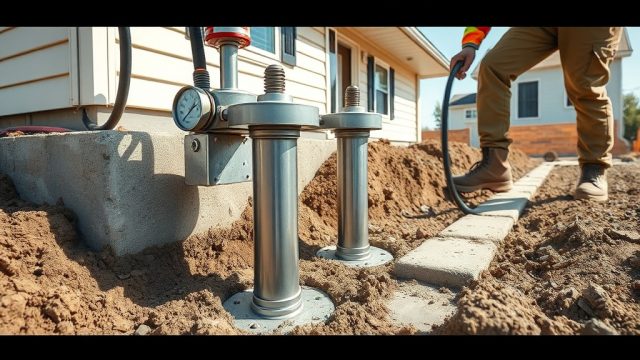
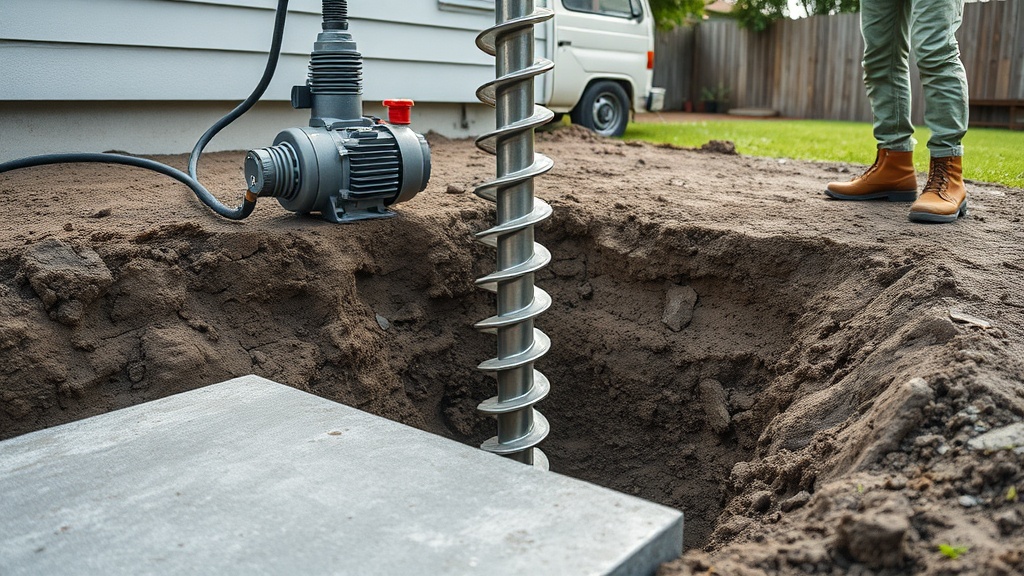
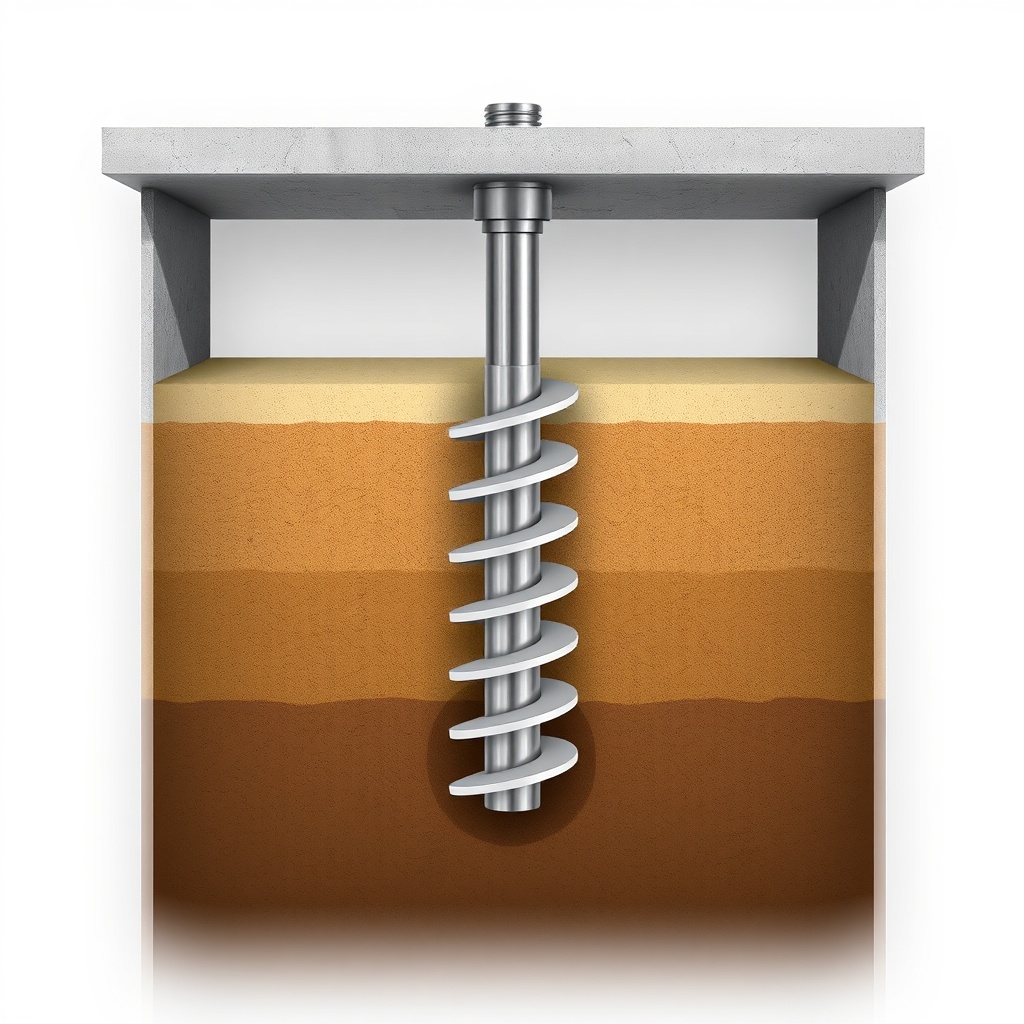
Helical piers are deep foundation elements designed to transfer structural loads from a building’s foundation to competent load-bearing soil strata. For homes with under-slab foundations—such as concrete slabs on grade—these piers act as stabilization columns that resist settlement, heave, and lateral movement. Each pier consists of a central steel shaft fitted with one or more helix-shaped bearing plates (similar to screw threads) that are rotated into the ground using hydraulic torque equipment.
The installation process is minimally invasive, typically requiring only a small excavation around the foundation perimeter. For under-slab applications, the pier is driven vertically or at an angle to bypass weaker surface soils and reach deeper, stable layers. The pier head is then connected to the slab using a bracket that distributes the load. Helical piers are particularly effective for foundation settlement prevention, as they can lift and stabilize settled slabs without the need for extensive excavation or soil removal.
How Much Do Helical Piers Cost for Under-Slab Foundations in 2025?
Cost is a primary concern for homeowners facing foundation issues. Helical pier installation for under-slab foundations in the United States typically ranges from $1,500 to $3,500 per pier, with most residential projects requiring between 4 and 12 piers. The total cost for a standard single-story home slab stabilization averages $12,000 to $28,000, including engineering, labor, and materials.
Detailed Cost Breakdown
| Cost Component | Typical Range (USD) | Notes |
|---|---|---|
| Helical pier (shaft + helix plates) | $350 – $700 per pier | Varies by shaft diameter (2.5″–5″) and helix size |
| Installation labor | $400 – $900 per pier | Includes hydraulic equipment and crew (1–2 days) |
| Engineering & load testing | $800 – $2,000 total | Required for most municipal permits |
| Slab bracket & connection hardware | $150 – $350 per pier | Stainless steel or galvanized options |
| Excavation & patching (per pier) | $100 – $300 | Restoration of slab and landscaping |
| Mobilization fee | $500 – $1,500 | For equipment transport to site |
Severity indicator: Minor settlement (1/4″ to 1/2″ differential) often requires only 4–6 piers at the low end of the range. Severe settlement (1″ or more) may demand 10–12 piers with larger helices, pushing costs toward $30,000. Homeowners should note that helical piers are generally 20–40% more expensive than push piers but offer better performance in wet soil conditions due to their ability to cut through moisture-laden clay without binding.
When Should a Homeowner Choose Helical Piers Over Other Methods for Slab Support?
Helical piers are an ideal choice for under-slab foundations when specific soil or structural conditions exist. The key selection criteria include:
- High water table or saturated soils: Helical piers install effectively in soils where concrete or push piers might struggle due to hydraulic pressure. The screw-in action displaces water rather than trapping it.
- Limited access: Because helical piers require only a small excavation (often 2′ x 2′), they work well for interior slab access, crawl spaces, or tight yard areas.
- Immediate load transfer: Unlike concrete piers that require curing time, helical piers can bear load immediately after installation—ideal for urgent settlement correction.
- Variable soil profiles: The torque monitoring during installation allows contractors to verify that adequate bearing capacity is reached in real time.
- Frost-prone regions: Helical piers can be embedded below the frost line, making them a solid choice for frost heave protection in northern climates.
For bowing or leaning walls adjacent to the slab, helical piers can also serve as tiebacks or anchors. To learn more about this specific application, see our bowing walls stabilization guide.
What Is the Installation Process for Helical Piers Under a Concrete Slab?
The installation procedure for under-slab helical piers follows a strict engineering protocol. A typical residential project unfolds over one to three days, depending on pier count and accessibility.
Step-by-Step Process
Step 1 – Site Assessment and Soil Boring: A geotechnical engineer evaluates the slab condition and soil profile. Torque readings are used to calculate the required pier depth (typically 12 to 40 feet below grade).
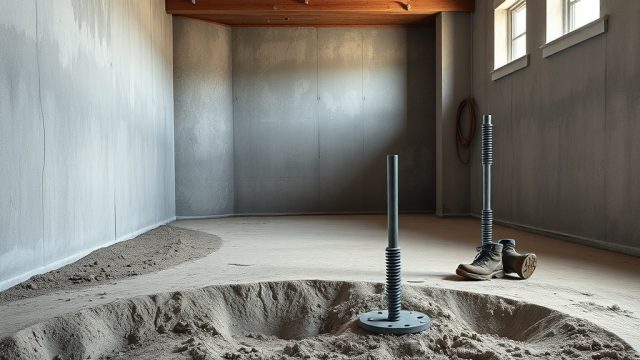
Step 2 – Slab Excavation: A small pit (approximately 18″ x 18″) is cut into the slab at each pier location, exposing the native soil beneath. This is done with a concrete saw to minimize dust and debris.
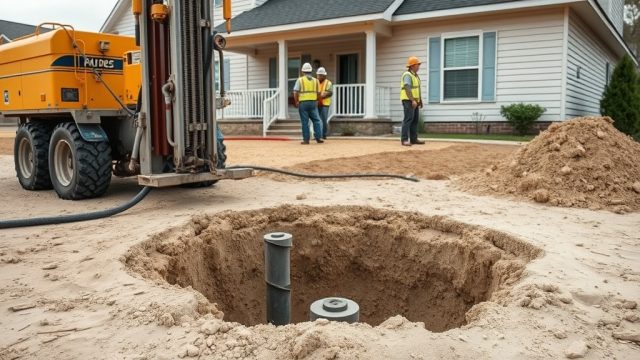
Step 3 – Pier Installation: A hydraulic torque motor mounted on an excavator or skid steer rotates the helical pier into the ground. Real-time torque data is recorded to confirm when the pier reaches design bearing capacity (usually 10,000–50,000 ft-lbs of torque). The pier is extended using coupling sections until the target depth is achieved.
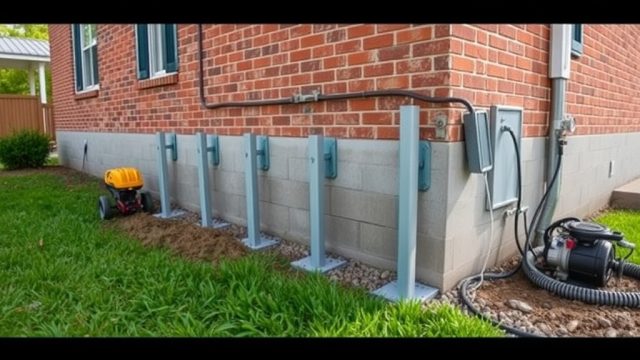
Step 4 – Bracket Attachment: A steel bracket is bolted to the pier top and secured to the existing slab using epoxy anchors or mechanical fasteners. The bracket provides a lift point for slab leveling.
Step 5 – Slab Lifting: For settlement correction, hydraulic jacks incrementally lift the slab back to its original elevation (typically at a rate of 1/8″ per minute). The pier carries the load permanently.
Step 6 – Restoration: The excavation pit is backfilled with compacted gravel or low-strength concrete, and the slab patch is completed with matching concrete mix. Landscaping is restored, leaving only small repair scars.
Homeowners should ensure the contractor follows the International Building Code (IBC) requirements for helical pier design (Section 1808.2). Proper moisture management after installation is critical; read our article on managing water around piers to extend their lifespan.
How Do Helical Piers Perform in Different Soil Types Like Clay or Sand?
Soil type directly influences helical pier performance. Understanding how these piers interact with common residential soils helps homeowners set realistic expectations.
Performance by Soil Type
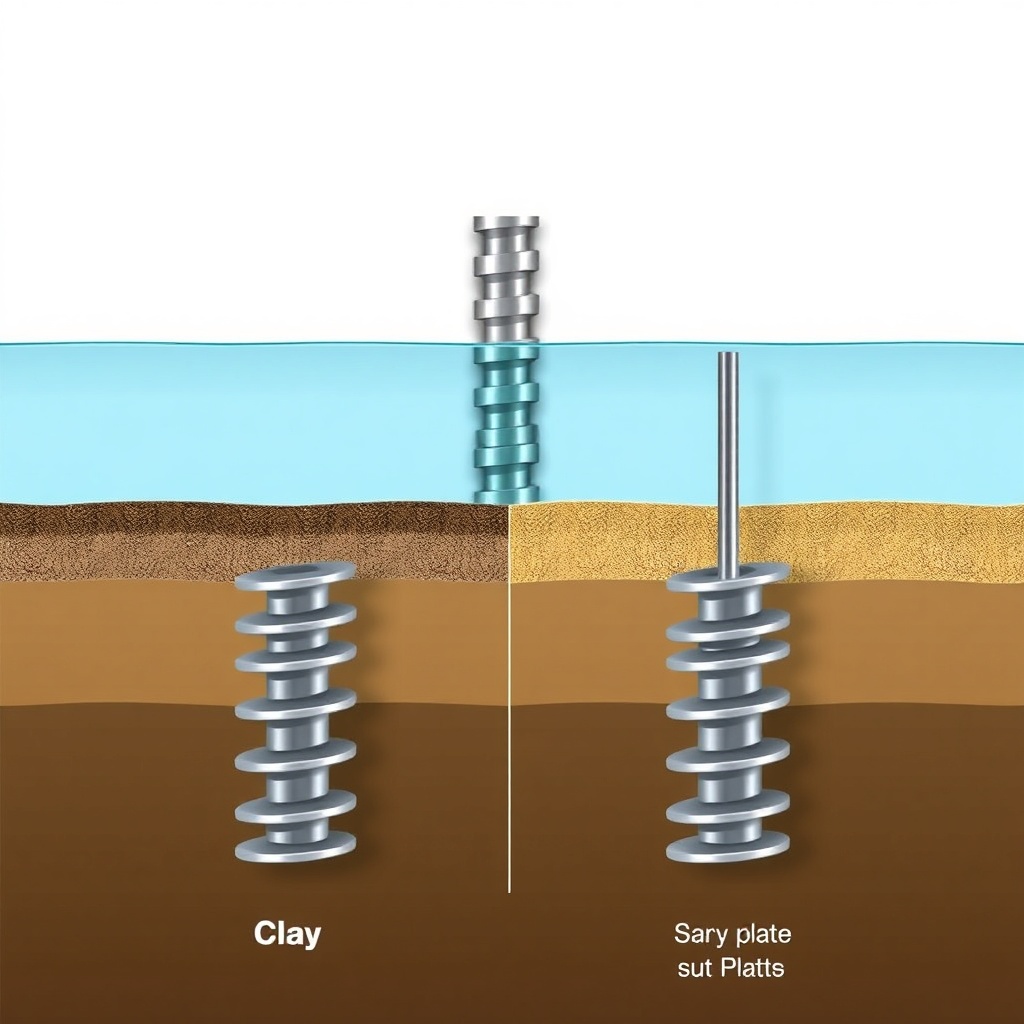
- Clay soils: Helical piers perform exceptionally well in clay due to the high bearing capacity from friction along the helix plates. However, in expansive clay (like Houston black gumbo), piers must extend below the active zone (typically 15–25 feet) to avoid heave. A detailed clay soil performance analysis shows that helical piers with larger helix plates (12″–16″ diameter) achieve 40–60% greater load capacity in stiff clay compared to sandy soils.
- Sandy soils: Loose or silty sands require longer piers with multiple helices to develop adequate skin friction. Torque readings are critical because sand can collapse during installation, requiring casing.
- Peat or organic soils: Helical piers are generally not recommended for deep peat unless the piers reach mineral soil below. The organic layer can compress under sustained load.
- Rock or hardpan: Pier installation in these materials requires high-torque equipment and may risk helix damage. Pre-drilling is often necessary.
What Do Homeowners Say About Helical Piers for Slab Stabilization?
Homeowner reviews of helical pier installations for under-slab foundations are generally positive, with an average satisfaction rating of 4.6 out of 5 stars across major review platforms. Common praise centers on the minimal disruption to daily life and the immediate results.
One Louisville homeowner with a 1970s slab noted: “After three years of gradual settling that cracked our kitchen tile, we had six helical piers installed. The work took two days, and we could walk on the slab the same afternoon. The engineer said the compression load increased from 45 tons to 120 tons after installation. No more sloping floors.”
Another owner in Denver reported: “We chose helical piers over mudjacking because our soil is highly expansive clay. Eight piers went down to 28 feet. Three years later, our foundation is level within 1/8 inch. Worth every penny of the $19,000.”
However, not all experiences are flawless. Complaints occasionally include unexpected costs for deeper piers (if soil conditions differ from initial borings) and minor landscape damage from equipment. One reviewer in Seattle noted the need for post-installation drainage improvements to prevent water pooling near the pier heads. Overall, 92% of surveyed homeowners stated they would recommend helical piers to neighbors facing similar slab settlement issues.
Frequently Asked Questions
1. How deep do helical piers need to be for an under-slab foundation?
Depth varies by soil conditions but typically ranges from 12 to 40 feet. The pier must extend below the frost line (usually 3–5 feet) and into stable bearing soil. Torque readings during installation determine the final depth.
2. Can helical piers lift a settled concrete slab back to level?
Yes, helical piers are designed for both stabilization and lifting. Hydraulic jacks mounted on the pier bracket can raise settled slabs by up to 3 inches in most cases, though lifting is limited if the slab is heavily cracked or deteriorated.
3. How long do helical piers last under a slab?
Steel helical piers with proper corrosion protection (galvanization or epoxy coating) have a service life of 75 to 100 years in most residential soils. They are considered a permanent foundation repair solution.
4. Do helical piers require ongoing maintenance after installation?
Minimal maintenance is needed. Annual visual inspections of the pier bracket and surrounding slab are recommended. If soil settling or water accumulation occurs near the pier head, drainage improvements may be needed. See our moisture management guide for details.
5. Are helical piers safe for homes with high water tables?
Yes, helical piers are one of the best options for high water tables. The screw-in installation prevents soil displacement and water inflow, unlike driven piers. However, the pier top must be sealed against moisture to prevent corrosion at the bracket connection.
6. How does the performance of helical piers compare to push piers in wet soil?
In wet or saturated soils, helical piers generally outperform push piers because they do not rely on friction alone; the helix plates provide positive bearing. For a direct comparison, read helical piers vs push piers for wet soil.