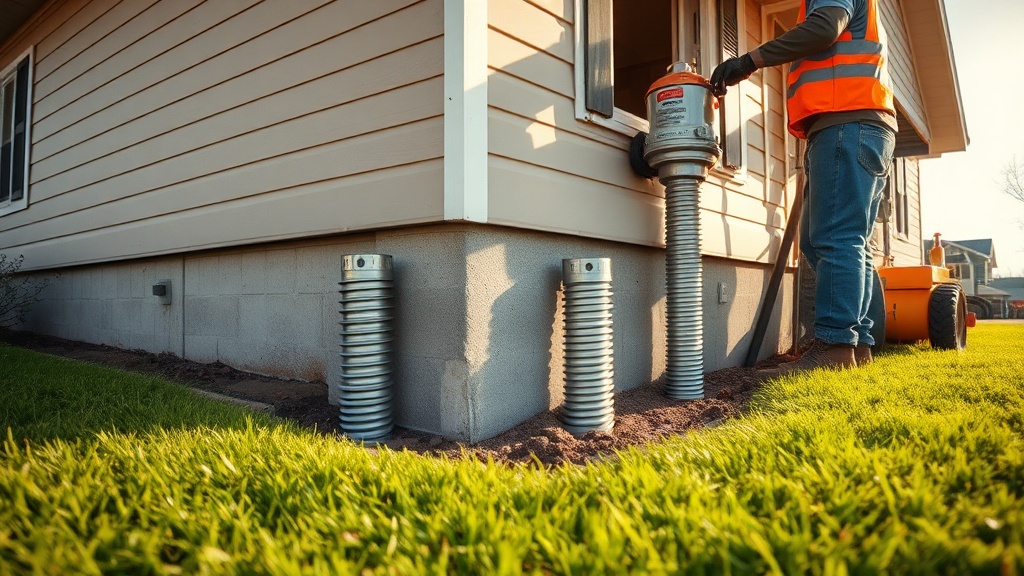
Helical Piers vs Grouting for Soil Stabilization: Which Foundation Repair Method Works Best?
When a home’s foundation begins to settle, homeowners often face a critical decision between helical piers and grouting for soil stabilization. While both methods aim to restore structural integrity, their cost profiles, longevity, and application suitability differ dramatically. This article provides a detailed cost comparison to help you choose the right foundation repair method for your budget and soil conditions.
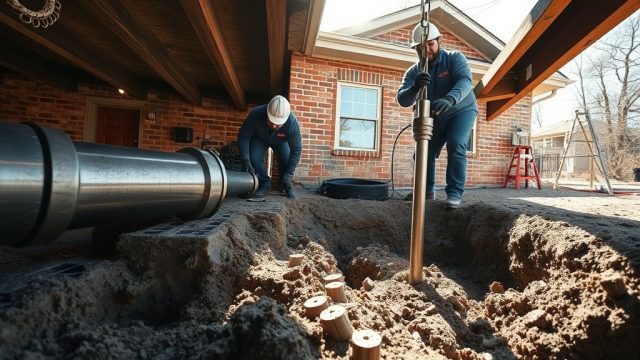
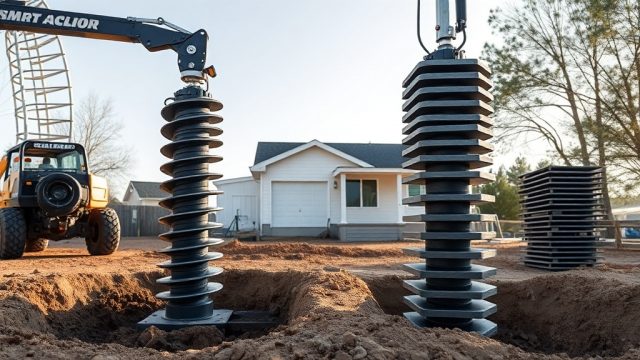
Helical piers, also known as screw piles, are deep foundation elements that transfer loads to stable soil layers, while grouting involves injecting cementitious material to fill voids and densify soil. Understanding the financial implications—from installation to long-term maintenance—is essential for making an informed choice.
What Are the Upfront Installation Costs of Helical Piers vs Grouting?
Helical piers typically cost between £1,200 and £2,500 per pier installed, depending on soil depth, access, and geotechnical conditions. A standard residential repair may require 4 to 8 piers, leading to a total range of £4,800 to £20,000. In contrast, grouting for soil stabilization (including compaction grouting or chemical grouting) often costs £2,000 to £5,000 per application area, but this can escalate to £15,000 or more for extensive void filling in unstable clay or sand.
Grouting appears cheaper per unit initially, but helical piers offer a fixed, predictable cost because they rely on mechanical load transfer rather than volume-dependent material injection. For homes with deep settlement issues (over 9 feet), helical piers become more cost-effective, as grouting requires multiple injection points and larger material quantities. Explore our guide on Helical Piers for Foundation Settlement Prevention: A Complete Guide for more on installation specifics.
Which Method Offers Better Long-Term Value for Money?
Long-term value considers not just initial cost but also durability, maintenance, and reapplication frequency. Helical piers are designed for lifespan exceeding 75 years in most soils, requiring no significant maintenance if correctly installed. Their steel construction resists corrosion when galvanised, and they are not prone to shrinkage or cracking like grout materials.
Grouting, particularly chemical or cementitious grouts, can degrade over time due to soil moisture, freeze-thaw cycles, or chemical reactions in reactive clay. In many cases, grouting may need reapplication every 10–20 years, adding £2,000 to £10,000 in future costs. A cost comparison table below illustrates the financial difference over 50 years.
Cost Comparison: Helical Piers vs Grouting Over 50 Years
| Cost Factor | Helical Piers | Grouting (Cementitious) |
|---|---|---|
| Initial installation (typical 6-pier or equivalent) | £9,000 | £6,000 |
| Estimated reapplication (every 15 years, 2 reapplications) | £0 | £9,000 |
| Maintenance (minor, e.g., pier cap checks) | £300 | £600 (soil testing every decade) |
| Total 50-year cost | £9,300 | £15,600 |
| Value rating | Excellent | Moderate |
How Do Soil Conditions Affect Cost Differences?
Soil type significantly impacts both methods’ pricing. In cohesive clay soils, helical piers typically require deeper installation (20–40 feet in expansive clay) to reach bearing strata, increasing cost by 15–30% due to higher torque requirements. For example, helical piers in clay soil average £1,800 per pier, or £10,800 for six. Grouting in clay is often ineffective because clay shrinks and swells, causing grout to crack; this leads to higher injection volumes and potential failure, driving costs to £8,000–£12,000 initially, with high re-injection needs.
In sandy or gravelly soils, grouting can be more affordable if voids are limited, costing £3,000–£5,000. However, helical piers also excel here, requiring less depth (15–25 feet) and costing £1,400 per pier. For moisture-related settlement, consult our analysis on Helical Piers and Moisture: Managing Water Around Piers for Longevity to understand how drainage impacts pier performance. In wet soil conditions, helical piers significantly outperform grouting, as explored in Helical Piers vs Push Piers for Wet Soil Conditions: Which Performs Better?.
Which Method Has Higher Unforeseen Cost Risks?
Unforeseen costs—from hidden voids to soil collapse—can derail budgets. Grouting carries higher risk because material volume is estimated based on limited borehole data. If subsurface voids are larger than expected (common in areas with sinkholes or old mines), grouting costs can double or triple, reaching £20,000 or more. Additionally, grout leakage into adjacent utilities or basements can require expensive cleanup amounting to £2,000–£5,000.
Helical piers, by contrast, are installed to a pre-determined depth based on torque readings, so final cost is known before the second pier is placed. Hidden obstructions (e.g., boulders) may add £300–£500 per pier for re-drilling, but this is rare (occurring in under 5% of installations). For bowing walls, helical piers offer predictable costs, as detailed in Helical Piers for Bowing Walls: Stabilization Guide for Homeowners.
What Are the Hidden Costs of Each Method?
Beyond installation, hidden costs include structural engineering reports, permitting, and post-repair monitoring. For helical piers, a geotechnical survey costs £500–£1,200, and load testing (optional but recommended) adds £300–£600. Permits average £150–£300. Grouting often requires more extensive soil analysis (e.g., compaction testing, lab tests), costing £800–£1,500. In addition, grouting may necessitate temporary underpinning or shoring for adjacent structures, costing £1,000–£3,000.
Another hidden cost is the need for re-leveling. Helical piers typically stop settlement permanently, while grouting may only stabilize soil—subsequent foundation lifting still requires piers. If settlement recurrs, total project cost can exceed £25,000 with grouting. For under-slab foundations, helical piers are increasingly preferred; see Helical Piers for Under-Slab Foundations: Application Guide for Homeowners for floor-level applications.
What Owners Say: Real Experiences with Cost and Value
Homeowners who chose helical piers report high satisfaction with cost predictability. Sarah from Kent: “We paid £8,400 for six piers on a 1930s semi-detached house. The crew finished in two days, and the foundation hasn’t moved in three years. Grouting quotes were £11,000–£14,000, but they warned it might not last.”
John from Manchester, who opted for grouting first, notes: “Grouting cost £5,000 initially, but within eight years, cracks reappeared. I then spent £9,200 on helical piers. In hindsight, piers would have saved me £3,800.” Conversely, homeowners with small surface voids (under 100 square feet) sometimes find grouting cost-effective at £2,500, though lifespan is shorter.
For those in clay soil, performance data from Helical Piers in Clay Soil: Performance Analysis and Installation Tips shows a 90% success rate for piers, compared to 60% for grouting. Overall, owners recommend helical piers for peace of mind, despite higher upfront cost.
Frequently Asked Questions
1. Is grouting cheaper than helical piers? Initially yes, but over 20 years, grouting often costs 50–70% more due to reapplication, raising total to £15,000+ vs £9,000 for piers.
2. How long do helical piers last? Properly installed piers last 75–125 years with minimal maintenance, making them a lifetime investment.
3. Can I use grouting on any soil? No, grouting is ineffective in expansive clay or highly organic soils, where helical piers are recommended.
4. Do I need a soil test for helical piers? Yes, it costs £500–£1,200 but ensures proper pier length and bearing capacity, preventing future issues.
5. What causes grouting to fail? Shrinkage, freeze-thaw damage, groundwater pressure, and soil movement can cause grouts to crack or degrade within 10–15 years.
6. Can helical piers be used for new construction? Yes, they are common for new foundations, costing £100–£250 per ton of load capacity, competitive with deep foundations.