Carbon Fiber Straps vs Steel I-Beams: Which is Better for Basement Walls?
When a basement wall begins to bow inward from hydrostatic pressure, homeowners often face a choice between two leading reinforcement solutions: carbon fiber straps or steel I-beams. Both systems have proven track records, but they differ significantly in cost, installation complexity, and long-term performance. This article compares the two options head-to-head to help you decide which is better for your specific situation.
What Exactly Are Carbon Fiber Straps and How Do They Compare to Steel I-Beams?
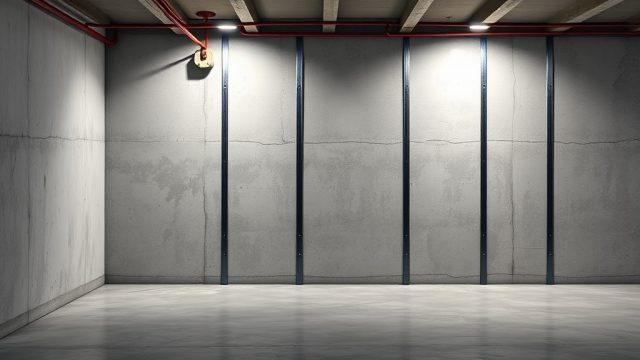
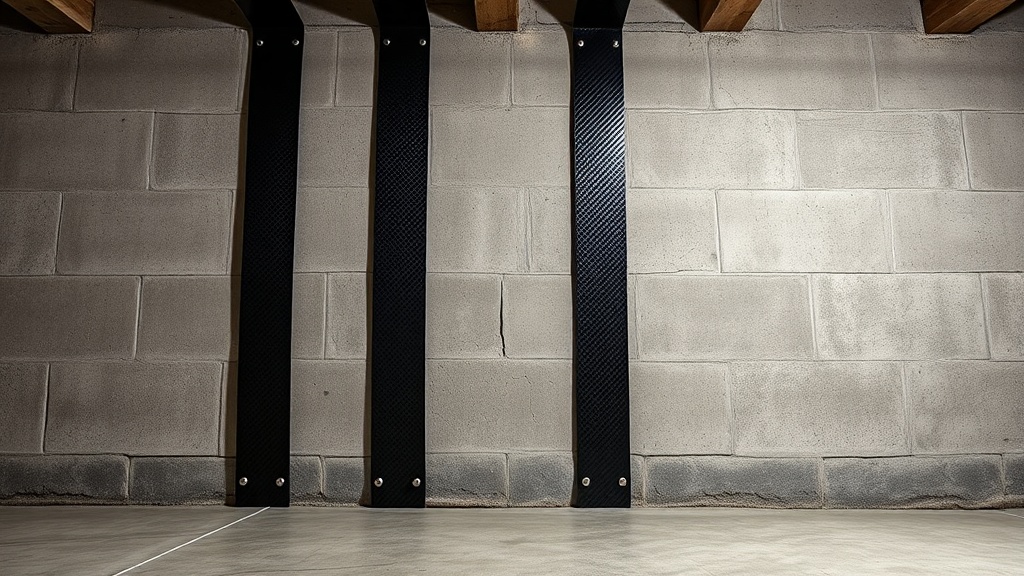
Carbon fiber straps are high-tensile-strength fabric strips impregnated with epoxy resin and applied directly to the surface of a bowed or cracked concrete basement wall. Once cured, they form an extremely rigid laminate that resists further wall movement. A single 4-inch-wide strap can carry over 10,000 pounds of tensile force, yet the material weighs almost nothing and adds less than 1/8 inch of thickness to the wall.
Steel I-beams, by contrast, are heavy structural steel members (typically 4 to 8 inches tall) anchored into the basement floor slab and the overhead floor joists or sill plate. They act as vertical buttresses, physically preventing the wall from moving inward. A typical installation uses beams spaced every 4 to 6 feet along the wall.
The core difference is that carbon fiber straps pull the wall together like a belt, while steel I-beams push back against the wall like a post. Each has its own set of trade-offs in cost, aesthetics, and structural behavior.
Which Option Has a Lower Upfront Cost: Carbon Fiber Straps or Steel I-Beams?
Cost is often the deciding factor for budget-conscious homeowners. For a typical 8-foot-tall basement wall with moderate bowing, carbon fiber strap installation runs between $400 and $800 per strap, including materials and labor. Most walls require 3 to 5 straps, so total costs land in the $1,200 to $4,000 range.
Steel I-beam installation is more expensive. Each beam costs roughly $600 to $1,200 for materials alone, plus labor for floor core-drilling, overhead anchoring, and beam placement. A typical 3-beam job runs $3,500 to $7,500. In major metro areas, specialized steel beam installation can exceed $10,000.
On pure upfront cost, carbon fiber straps are clearly the more affordable option. However, cost isn’t the only consideration—read on for durability and long-term value comparisons.
How Do Carbon Fiber Straps Perform in High-Moisture Basements Compared to Steel?
Basements are inherently damp environments. Steel I-beams, if they are standard A36 carbon steel, are susceptible to rust. Even with a primer coat, moisture cycles can cause pitting and corrosion over 10 to 15 years. Galvanized or stainless steel beams solve this but add 30–40% to material costs.
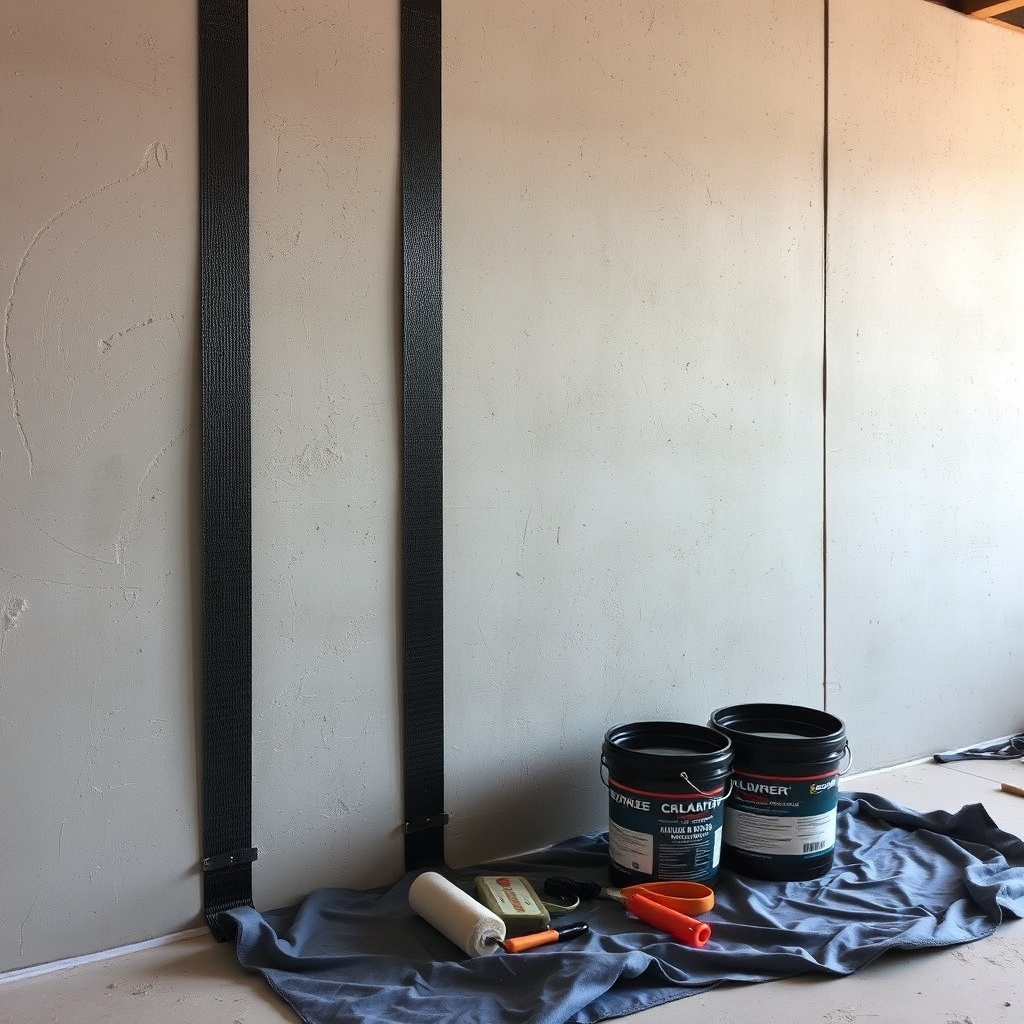
Carbon fiber is entirely inert—it does not rust, corrode, or rot. The epoxy used to bond the straps to the wall also seals the concrete surface, reducing moisture penetration. For this reason, carbon fiber straps are often preferred in chronically damp basements where steel beams would require ongoing rust prevention maintenance.
For a deeper dive into moisture behavior, see our guide on Carbon Fiber Straps and Moisture: Do They Resist Water Damage?
Which System Offers Faster Installation and Less Disruption?
Time matters when your basement is unfinished and you need to reclaim the space quickly. Carbon fiber strap installation typically takes 4–6 hours for a qualified crew to apply 4–5 straps. The wall must be dry and above 50°F for the epoxy to cure, but the straps reach full strength in 24 hours. No heavy equipment, no concrete dust, and no floor coring.
Steel I-beam installation takes at least two full days. Day one involves core-drilling holes into the floor slab (2 inches deep, 1-inch diameter), setting anchor brackets with epoxy, and bolting the beam to the floor. Day two includes lifting and securing the top connection to the joists, welding or bolting the beam cap, and applying a finish coat. Large quantities of concrete dust and steel grindings are inevitable.
For homeowners living in the home during repairs, carbon fiber is far less disruptive—no noise, no dust, no trip hazards from temporary support posts.
Do Carbon Fiber Straps or Steel I-Beams Provide Better Crack Prevention and Structural Support?
Both systems are designed to stop active wall movement, but they handle stress differently. Carbon fiber straps work in tension. As the wall tries to bow inward, the strap stretches elastically (a tiny fraction of a millimeter) before locking the wall in place. This allows the wall to maintain its original position while resisting further movement. The straps are most effective when the wall has bowed less than 2 inches.
Steel I-beams work in compression. They physically block the wall from moving past them. If the wall has already bowed more than 2 to 3 inches, steel beams can be adjusted to push the wall back partially (using turnbuckles or hydraulic jacks). However, this “push-back” method can crack the wall further if done too aggressively.
For cracking patterns that persist or widen after initial repair, refer to our article on When to Worry: Carbon Fiber Straps and Crack Widening Signs.
| Factor | Carbon Fiber Straps | Steel I-Beams |
|---|---|---|
| Typical wall bow limit | Up to 2 inches | Up to 4 inches (with push-back) |
| Tensile strength | 10,000+ lbs per strap | 15,000–25,000 lbs per beam |
| Moisture resistance | Excellent (inert) | Good (with coating), poor if bare |
| Installation time | 4–6 hours (one day) | 2 days (full cure + 1 day) |
| Aesthetic impact | Low (flush with wall) | High (protrudes 4–8 inches) |
| Finish options | Paintable or hide behind drywall | Paintable or box in with wood |
| Cost (3-beam/strap job) | $1,200–$4,000 | $3,500–$7,500 |
What Do Owners Say About Their Experiences With Carbon Fiber Straps vs Steel I-Beams?
Homeowners who chose carbon fiber straps often comment on the clean, low-profile result. “We finished our basement after the straps went in, and you can’t even tell they are there behind the drywall. The structural engineer said the straps tested out at stronger than steel for our crack width,” one owner in Cleveland noted. Another in Seattle mentioned, “We had water issues, and the steel beam option required sandblasting and repainting every few years. With carbon fiber, I set it and forget it.”
Those who selected steel I-beams mention durability in extreme bowing cases. “Our wall had already bowed 3.5 inches. The contractor recommended steel beams because they could jack the wall back about half an inch. Carbon fiber wouldn’t have done that,” said a homeowner in Chicago. However, some reported losing significant floor space: “Those beams stick out a good 6 inches. We had to rearrange our storage shelves completely.”
Carbon Fiber Straps for Foundation Crack Repair: Step-by-Step Installation offers more firsthand perspectives on the installation process.
Frequently Asked Questions
1. Can carbon fiber straps be used on walls that have already bowed more than 2 inches?
Generally, no. Carbon fiber straps work best when the wall has bowed less than 2 inches. For severe bowing (2 to 4 inches), steel I-beams or wall anchors are more appropriate. Always have a structural engineer evaluate the bow measurement before deciding.
2. Do carbon fiber straps require maintenance or inspection over time?
Minimal maintenance is needed. You should visually inspect the straps annually for any signs of cracking or delamination. If the wall remains dry and the epoxy bond is intact, the straps will last indefinitely. Steel beams, on the other hand, require periodic rust checks and repainting in damp environments.
3. Which system is better for a finished basement?
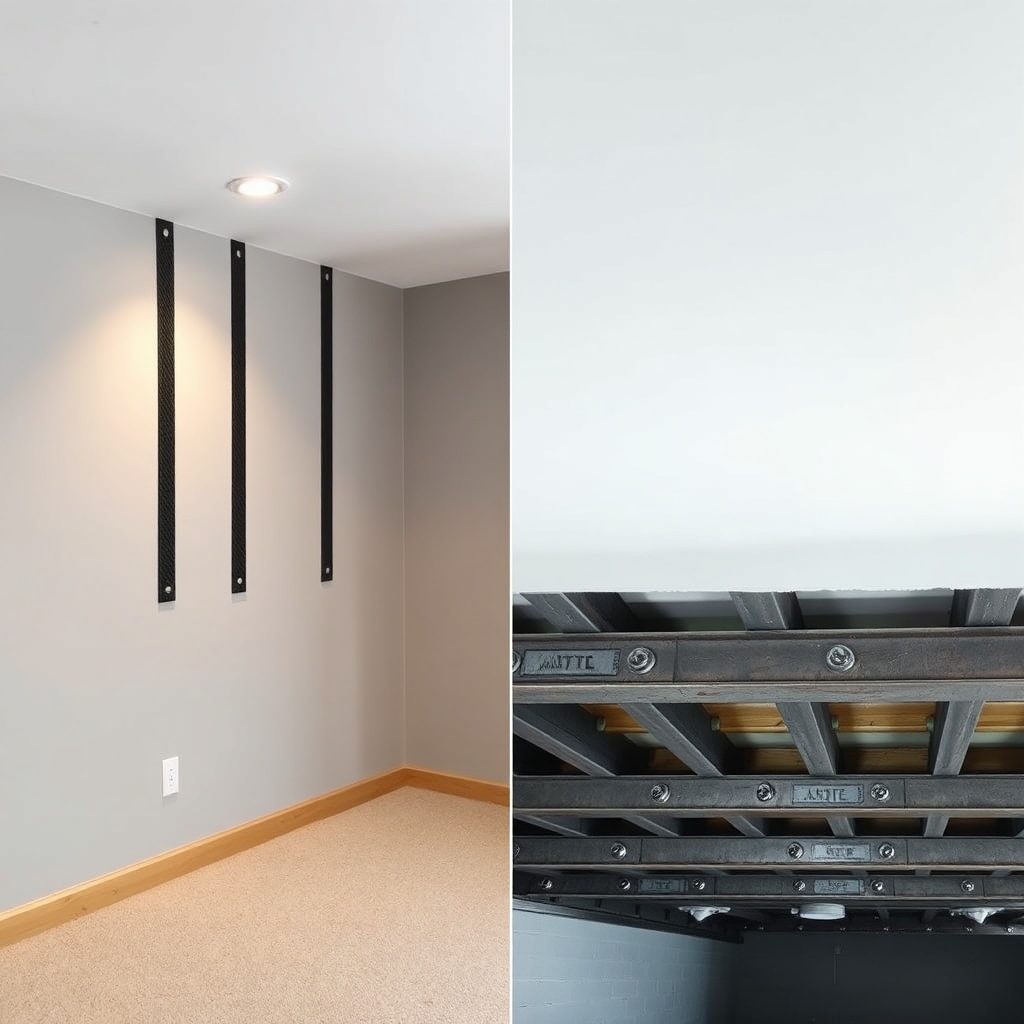
Carbon fiber straps are ideal for finished basements because they can be covered with drywall or paint with virtually no bulge. Steel I-beams protrude several inches from the wall and require boxing-in, which reduces floor space and adds framing costs.
4. Can I install carbon fiber straps myself to save money?
We strongly advise against it. Proper surface preparation, epoxy mixing ratios, strap tensioning, and curing conditions require professional training. A DIY installation may fail under load, leading to wall collapse. Always hire a licensed foundation repair contractor.
5. Do carbon fiber straps work on block walls?
Yes, but the installation differs slightly. The straps must be embedded horizontally into the mortar joints or bonded across multiple concrete blocks. Block walls typically require more straps than poured concrete walls due to the weaker masonry units. Some contractors recommend steel beams for heavily bowed block walls.
6. Is a permit required for carbon fiber strap installation?
In most U.S. jurisdictions, yes. Structural work on load-bearing foundation walls usually requires a building permit and an engineer’s stamped design. Steel I-beam installations almost always require a permit. Always check with your local building department before starting any foundation repair.